2026 Social Security COLA: Impact on Retiree Finances

Understanding the 2026 Social Security Cost-of-Living Adjustment (COLA) is vital for retirees, as it directly influences their monthly benefits and ability to keep pace with rising living expenses, particularly inflation.
For millions of Americans, Social Security benefits represent a cornerstone of their retirement income. As we look ahead,
Analyzing the 2026 Social Security Cost-of-Living Adjustment (COLA) and Its Impact on Retirees
becomes an increasingly critical exercise. This adjustment, designed to help beneficiaries maintain their purchasing power, is more than just a number; it’s a direct reflection of economic realities and a key determinant of financial well-being for seniors across the United States. How will this anticipated change affect your budget, your long-term plans, and your peace of mind? Let’s delve into the intricacies of COLA and prepare for what’s to come.
Understanding the Social Security COLA Mechanism
The Social Security Cost-of-Living Adjustment (COLA) is an annual increase in benefits paid to Social Security beneficiaries, Supplemental Security Income (SSI) recipients, and other federal retirees. Its primary purpose is to offset the effects of inflation, ensuring that the purchasing power of these benefits does not erode over time. The mechanism behind COLA is precise, relying on specific economic indicators to determine the adjustment percentage.
Historically, COLA has been a vital lifeline, allowing retirees to cope with rising costs of living, particularly for essentials like food, housing, and healthcare. Without these adjustments, the fixed income of many seniors would quickly fall behind the pace of economic change, leading to significant financial hardship. The Social Security Administration (SSA) announces the COLA for the coming year in October, based on data from the third quarter.
How COLA is Calculated: The CPI-W
The COLA calculation is tied directly to the Consumer Price Index for Urban Wage Earners and Clerical Workers (CPI-W). This specific index measures the average change over time in the prices paid by urban wage earners and clerical workers for a market basket of consumer goods and services. The COLA is determined by comparing the average CPI-W for the third quarter (July, August, and September) of the current year with the average for the third quarter of the last year in which a COLA was payable. If there is an increase, the percentage increase becomes the COLA for the following year.
- CPI-W Data: The specific index used, reflecting expenditures of urban wage earners.
- Third Quarter Comparison: July, August, and September data are crucial for the calculation.
- Lagging Indicator: COLA adjusts for past inflation, not future projections.
- No COLA Years: If inflation is negative or flat, there may be no COLA.
Understanding this calculation method is crucial for beneficiaries to anticipate potential adjustments. While the CPI-W aims to reflect the spending patterns of a broad group, some argue that it may not fully capture the unique expenditure patterns of retirees, particularly concerning healthcare costs, which tend to rise faster than general inflation. Nevertheless, it remains the official metric for determining the annual COLA, directly influencing the 2026 Social Security COLA.
In conclusion, the COLA mechanism is a complex but essential component of the Social Security system, designed to protect the financial stability of retirees. Its reliance on the CPI-W and the specific quarterly data makes its prediction a subject of ongoing analysis, especially as we approach the announcement for future adjustments like the 2026 COLA.
Forecasting the 2026 Social Security COLA
Predicting the exact percentage of the 2026 Social Security COLA is a speculative endeavor, as it depends entirely on future inflation data, specifically the CPI-W readings for July, August, and September of 2025. However, economists and financial analysts regularly offer projections based on current economic trends, historical patterns, and various inflation forecasts. These projections, while not guarantees, provide valuable insights for retirees attempting to plan their future finances.
Several factors influence these forecasts, including global economic conditions, domestic consumer spending, energy prices, and supply chain dynamics. A robust economy with high demand can lead to inflationary pressures, potentially resulting in a higher COLA. Conversely, economic slowdowns or deflationary periods could yield a lower or even zero COLA. Analyzing these variables is key to forming an educated estimate.
Key Economic Indicators to Watch
To get a better sense of where the 2026 COLA might land, it’s important to monitor specific economic indicators throughout 2025. These include the overall Consumer Price Index (CPI), particularly its core components excluding volatile food and energy prices, and of course, the CPI-W. Trends in wage growth and unemployment rates can also offer indirect clues about inflationary pressures. Furthermore, global events, such as geopolitical conflicts or major shifts in commodity markets, can have significant and often unpredictable impacts on inflation.
- Inflation Rates: Keep an eye on monthly CPI reports and overall inflation trends.
- Energy Prices: Fluctuations in oil and gas prices directly impact the CPI-W.
- Supply Chain Stability: Disruptions can lead to price increases across various goods.
- Federal Reserve Policy: Interest rate decisions can influence economic activity and inflation.
Financial institutions and government agencies often release their own inflation outlooks, which can be helpful reference points. While these forecasts vary, they generally converge as the year progresses and more concrete data becomes available. Retirees should consult reputable sources for these projections and understand that they are subject to change. The ultimate figure will only be known once the official CPI-W data for the third quarter of 2025 is finalized and announced by the Social Security Administration.
In summary, while the precise 2026 COLA remains an unknown, closely tracking key economic indicators and expert forecasts can help retirees make more informed financial decisions. It’s a practice of continuous monitoring and adaptation to the evolving economic landscape.
The Impact of COLA on Retiree Purchasing Power
The 2026 Social Security COLA, whatever its final percentage, will have a direct and tangible impact on the purchasing power of millions of retirees. The fundamental goal of COLA is to ensure that Social Security benefits keep pace with inflation, preventing seniors from losing ground financially as the cost of goods and services rises. A COLA that adequately reflects inflation helps retirees maintain a consistent standard of living, covering essential expenses without undue strain.
However, the effectiveness of COLA in preserving purchasing power is a frequent subject of debate. Many argue that the CPI-W, while broadly representative, may not accurately reflect the spending patterns of older Americans, who often spend a larger proportion of their income on healthcare and housing – categories that can experience higher rates of inflation than the general consumer basket. This discrepancy can lead to a perceived erosion of purchasing power, even with a COLA in place.
Challenges in Maintaining Standard of Living
Retirees often face unique financial challenges that can be exacerbated by inflation. Fixed incomes, limited opportunities for additional earnings, and rising healthcare costs mean that every dollar of Social Security benefits needs to stretch further. If the COLA is lower than the actual rate of inflation experienced by seniors, their disposable income effectively decreases, forcing them to make difficult choices about their spending.
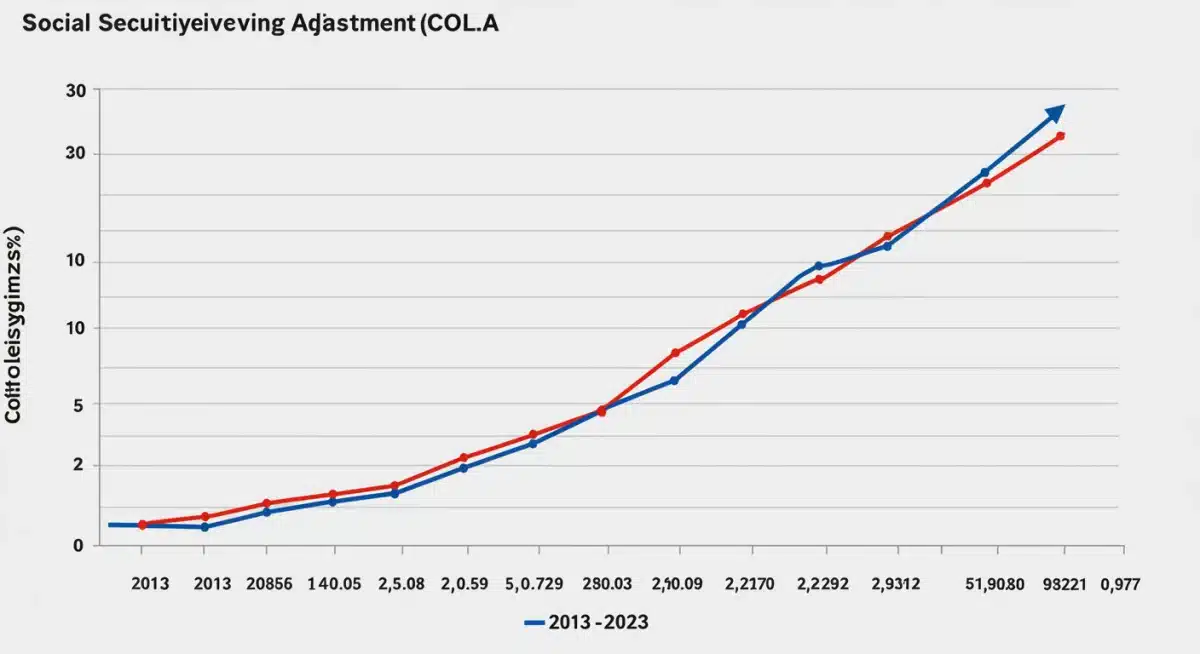
- Healthcare Costs: Often a significant and growing expense for retirees, sometimes outstripping general inflation.
- Housing Expenses: Property taxes, maintenance, and rent can rise steadily, impacting fixed budgets.
- Energy and Food: Volatile prices for these necessities can quickly strain a retiree’s budget.
- Medicare Premiums: These premiums can sometimes increase, offsetting a portion of the COLA.
For example, if the 2026 COLA is 2.5%, but a retiree’s personal inflation rate (driven by their specific spending on healthcare, prescriptions, and housing) is 3.5%, they effectively lose 1% of their purchasing power. Over time, these small gaps can accumulate, leading to a significant reduction in their ability to afford a comfortable retirement. This highlights the importance of not just the COLA percentage, but also its relevance to the actual cost of living for seniors.
In conclusion, while COLA is designed to protect purchasing power, its real-world impact can vary for individual retirees. Understanding these nuances is crucial for effective retirement planning and advocating for adjustments that truly reflect the financial realities faced by older Americans. The discussion around the 2026 COLA will undoubtedly include these considerations.
Planning Your Retirement Budget with COLA in Mind
Effective retirement planning requires a clear understanding of all income streams, and Social Security benefits, including the anticipated 2026 Social Security COLA, are a major component. While the exact COLA percentage won’t be known until late 2025, retirees and those approaching retirement can still incorporate COLA considerations into their budgeting and financial strategies. This proactive approach helps mitigate uncertainties and ensures a more stable financial future.
One of the most important aspects of budgeting with COLA in mind is to avoid relying solely on Social Security for all your expenses. Diversifying income sources, such as pensions, 401(k)s, IRAs, and other investments, provides a buffer against potentially lower-than-expected COLA increases or periods of high inflation that outpace the adjustment. It’s about building resilience into your financial plan.
Strategies for Financial Resilience
When creating or reviewing your retirement budget, consider various scenarios for the COLA. It’s often prudent to plan conservatively, assuming a modest COLA or even a year without one, to ensure your essential expenses can still be covered. This approach helps prevent financial stress if the actual COLA is lower than hoped. Regularly reviewing your expenses and finding areas where you can save is also a continuous process that can free up funds.
- Conservative COLA Estimates: Budget for a lower-than-expected COLA to avoid shortfalls.
- Expense Tracking: Regularly monitor spending to identify potential savings.
- Emergency Fund: Maintain a robust emergency fund for unexpected costs.
- Healthcare Cost Planning: Factor in rising healthcare expenses, which often outpace COLA.
Furthermore, consider the tax implications of your Social Security benefits. A higher COLA means a higher benefit, which could potentially push more of your Social Security income into the taxable bracket, depending on your other income sources. This is an important consideration for tax planning and managing your overall financial picture. Consulting with a financial advisor can provide personalized guidance tailored to your specific situation, helping you navigate these complexities and optimize your retirement income.
In conclusion, incorporating the COLA into your retirement budget is more than just anticipating an increase; it’s about building a flexible and resilient financial plan. By understanding the potential impacts and adopting conservative strategies, retirees can better prepare for the financial realities of their golden years, regardless of the precise 2026 COLA.
Potential Economic Factors Influencing the 2026 COLA
The determination of the 2026 Social Security COLA will be shaped by a confluence of economic factors that are constantly in flux. Understanding these underlying forces provides a deeper insight into why COLA percentages fluctuate year to year and what beneficiaries might reasonably expect. These factors extend beyond simple inflation figures, encompassing broader economic health and global dynamics.
One significant factor is the overall health of the U.S. economy. A strong economy, characterized by high employment and robust consumer demand, often leads to upward pressure on prices as businesses face higher labor and material costs, which they pass on to consumers. Conversely, an economic downturn typically results in lower inflation, which in turn can lead to a smaller COLA or even no COLA at all, as seen in some past years.
Global and Domestic Economic Drivers
Global events play an increasingly important role. Geopolitical tensions, disruptions in international trade, and changes in global commodity markets (especially oil and natural gas) can have a ripple effect on domestic prices. For instance, a surge in global energy prices can quickly translate into higher transportation costs and utility bills, directly impacting the CPI-W. Similarly, supply chain resilience, or lack thereof, can dictate the availability and cost of goods, influencing inflation.

- Labor Market Conditions: Wage growth and employment levels can fuel or dampen inflation.
- Energy Market Volatility: Global oil production and demand directly affect consumer prices.
- Geopolitical Stability: Conflicts or trade wars can disrupt supply chains and increase costs.
- Consumer Demand: Strong consumer spending can push prices higher.
Domestic policy decisions also wield considerable influence. The Federal Reserve’s monetary policy, particularly interest rate adjustments, aims to manage inflation and employment. Higher interest rates typically cool down the economy, potentially leading to lower inflation, while lower rates can stimulate economic activity and potentially higher inflation. Government fiscal policies, such as spending programs or tax changes, can also impact demand and price levels. All these dynamics will contribute to the economic environment that shapes the CPI-W in 2025, ultimately determining the 2026 COLA.
In essence, the 2026 COLA is a product of a complex interplay of domestic and international economic forces. Staying informed about these broader trends provides retirees with a more holistic view of their financial outlook and the factors that will directly affect their Social Security benefits.
The Long-Term Outlook for Social Security and COLA
Beyond the immediate implications of the 2026 Social Security COLA, it’s crucial for retirees and future beneficiaries to consider the long-term outlook for the Social Security system and its ability to provide consistent cost-of-living adjustments. The financial health of Social Security is a perennial topic of discussion, with various proposals aimed at ensuring its solvency for generations to come. These discussions inevitably touch upon how future COLA calculations might be affected.
The Social Security Administration’s annual Trustees’ Report provides projections on the program’s financial status, including when its trust funds might be depleted if no legislative changes are made. While Social Security is not projected to run out of money entirely, benefit cuts could occur if the trust funds are exhausted. This long-term solvency issue creates a backdrop against which all COLA discussions take place, as any major reform could impact how benefits are adjusted in the future.
Potential Reforms and Their COLA Implications
Several reform proposals have been put forth over the years, each with different potential implications for COLA. Some suggestions include changing the index used to calculate COLA, such as shifting from the CPI-W to the Chained CPI. The Chained CPI generally shows lower inflation rates because it accounts for consumers substituting cheaper goods when prices rise, which would result in smaller COLA increases over time. Other proposals involve adjusting the age at which full retirement benefits can be claimed or modifying the formula used to calculate initial benefits.
- Chained CPI: A proposed alternative index that could lead to smaller COLA increases.
- Benefit Formula Changes: Alterations to how initial benefits are calculated could indirectly affect COLA’s impact.
- Retirement Age Adjustments: Raising the full retirement age is another reform often discussed.
- Taxation of Benefits: Changes to how Social Security benefits are taxed could also be considered.
These potential reforms underscore the dynamic nature of Social Security and the ongoing need for policymakers to address its long-term financial challenges. While a change to the COLA calculation method would likely be met with significant debate, it remains a possibility in the broader context of Social Security reform. For retirees, understanding these potential long-term shifts is essential for comprehensive financial planning, ensuring they are prepared for various future scenarios.
In conclusion, the long-term outlook for Social Security is complex, involving both financial projections and potential legislative changes. While the 2026 COLA is a near-term concern, keeping an eye on these broader discussions about the program’s future is vital for all beneficiaries seeking financial security in retirement.
Navigating Inflation and Healthcare Costs in Retirement
For retirees, the implications of the 2026 Social Security COLA are inextricably linked to the persistent challenges of inflation and rising healthcare costs. Even with annual adjustments, these two factors often represent the most significant threats to a retiree’s financial stability and purchasing power. Effectively navigating these challenges requires proactive planning and a deep understanding of how they interact with Social Security benefits.
Inflation, while addressed by COLA, can still outpace the adjustment for certain expenses, particularly for seniors. The CPI-W, as noted, may not fully capture the specific inflationary pressures faced by older adults. This means that even with a COLA, retirees might find their budgets stretched thin for items like specialized medical care, prescription drugs, and certain types of housing that increase in cost faster than the general index.
Strategies for Managing Key Retirement Expenses
Managing healthcare costs is paramount. Medicare premiums, deductibles, co-pays, and out-of-pocket expenses for services not fully covered can quickly consume a significant portion of a retiree’s income. Exploring supplemental insurance options, such as Medigap policies or Medicare Advantage plans, can help manage these costs. Additionally, understanding prescription drug coverage through Medicare Part D and looking for generic alternatives or patient assistance programs can yield substantial savings.
- Review Medicare Options: Annually assess Medigap or Medicare Advantage plans.
- Prescription Drug Management: Utilize generics, compare prices, and explore assistance programs.
- Long-Term Care Planning: Consider long-term care insurance or alternative funding strategies.
- Housing Cost Management: Explore downsizing, property tax relief programs, or reverse mortgages if appropriate.
Beyond healthcare, retirees should also focus on strategies to combat general inflation. This includes maintaining a flexible budget that can adapt to rising costs, carefully managing discretionary spending, and exploring ways to reduce fixed expenses. For example, reviewing utility providers, seeking out senior discounts, and optimizing transportation costs can all contribute to making your Social Security benefits, even with the 2026 COLA, go further. Diversifying investments to include assets that historically perform well during inflationary periods can also provide a hedge.
In conclusion, while the 2026 COLA is a crucial component of retiree income, it’s not a standalone solution to the complexities of inflation and healthcare costs. A holistic approach that includes proactive healthcare planning, diligent budgeting, and strategic financial management is essential for maintaining financial well-being throughout retirement.
Advocacy and Future COLA Fairness
The discussion surrounding the 2026 Social Security COLA and its future implications often extends into the realm of advocacy. Many organizations and individuals champion the cause of ensuring that COLA accurately reflects the financial realities faced by retirees, pushing for reforms that could lead to more equitable adjustments. This advocacy is driven by the understanding that a fair COLA is fundamental to the dignity and financial security of older Americans.
A primary focus of advocacy efforts is often the method of COLA calculation itself. As previously mentioned, the CPI-W is designed for urban wage earners and clerical workers, and critics argue it doesn’t adequately capture the spending patterns of seniors, particularly their higher proportion of expenses on healthcare. Proponents of change often advocate for the adoption of a Consumer Price Index for the Elderly (CPI-E), which specifically tracks the spending habits of those aged 62 and older.
The Case for CPI-E and Other Reforms
Switching to the CPI-E for COLA calculations has been a long-standing proposal. Studies have shown that the CPI-E tends to rise faster than the CPI-W, primarily due to the heavier weighting of healthcare costs in the elderly’s spending basket. Adopting the CPI-E would, in theory, lead to higher COLA adjustments over time, providing a more accurate reflection of the cost of living for retirees and potentially enhancing their purchasing power.
- CPI-E Adoption: A key proposal for a more accurate reflection of retiree expenses.
- Protecting Benefits: Efforts to safeguard existing Social Security benefits from cuts.
- Legislative Engagement: Encouraging policymakers to prioritize retiree financial security.
- Public Awareness: Educating the public on the importance of COLA and its calculation.
Beyond the CPI-E, advocacy groups also focus on broader Social Security reforms aimed at ensuring the program’s long-term solvency without compromising benefits. This includes discussions on revenue enhancements, such as increasing the cap on earnings subject to Social Security taxes, or adjusting the tax rates themselves. The goal is to create a sustainable system that can continue to provide meaningful benefits and fair COLA adjustments for future generations of retirees.
In conclusion, the future fairness of COLA, including the 2026 Social Security COLA, is not just a matter of economic data but also a product of ongoing advocacy and legislative debate. Active engagement and support for reforms that better serve the needs of retirees are crucial to ensuring that Social Security continues to fulfill its vital role in providing financial security. The collective voice of beneficiaries and their advocates plays a significant role in shaping these outcomes.
| Key Aspect | Brief Description |
|---|---|
| COLA Purpose | Adjusts Social Security benefits to counteract inflation and preserve retiree purchasing power. |
| Calculation Basis | Determined by the Consumer Price Index for Urban Wage Earners and Clerical Workers (CPI-W) from Q3. |
| Impact on Retirees | Directly affects monthly benefits, helping to cover rising costs, especially healthcare. |
| Future Outlook | Influenced by economic factors, potential reforms (e.g., CPI-E), and ongoing advocacy efforts. |
Frequently Asked Questions About 2026 Social Security COLA
The main purpose of the Social Security Cost-of-Living Adjustment (COLA) is to protect the purchasing power of Social Security benefits. It ensures that benefits increase annually to keep pace with inflation, helping retirees and other beneficiaries afford rising costs of goods and services over time.
The 2026 COLA will be calculated based on the Consumer Price Index for Urban Wage Earners and Clerical Workers (CPI-W). Specifically, it compares the average CPI-W for the third quarter (July, August, September) of 2025 to the average for the third quarter of the last year a COLA was paid.
The official announcement for the 2026 Social Security COLA is typically made by the Social Security Administration (SSA) in October of 2025. This timing allows for the collection and analysis of the crucial third-quarter CPI-W data needed for the calculation.
While COLA aims to offset inflation, it’s based on the CPI-W, which may not fully reflect the specific and often higher inflation rates for healthcare expenses faced by retirees. Therefore, the COLA might not entirely cover the increase in healthcare costs for all beneficiaries.
Retirees can prepare by conservatively budgeting for COLA, tracking personal expenses, building an emergency fund, and planning for healthcare costs. Diversifying income sources and consulting a financial advisor for personalized strategies can also enhance financial resilience.
Conclusion
The 2026 Social Security COLA stands as a critical factor in the financial landscape for millions of American retirees. Its determination, rooted in economic data and broader market forces, directly influences the purchasing power and stability of Social Security benefits. While predicting the exact percentage remains challenging, understanding the calculation mechanism, monitoring key economic indicators, and proactively planning are essential steps for beneficiaries. Beyond the immediate adjustment, ongoing discussions about Social Security’s long-term solvency and potential reforms underscore the dynamic nature of this vital program. By staying informed and engaging in thoughtful financial planning, retirees can better navigate the economic shifts and secure their financial well-being well into the future.
