2026 Medicare Part B Premiums: Your Essential Healthcare Budget Guide

Understanding the 2026 Medicare Part B premium increases is crucial for effective healthcare budgeting, as these changes directly influence monthly costs and overall financial planning for beneficiaries nationwide.
Preparing for the future is always wise, especially when it comes to your healthcare expenses. The 2026 Medicare Part B premium increases: What you need to know for your healthcare budget is a topic that demands attention from millions of Americans. These adjustments can significantly impact your monthly outlays, making proactive planning essential.
Understanding Medicare Part B: The Basics
Medicare Part B covers medically necessary services and preventive services, forming a critical component of healthcare for many seniors and individuals with disabilities. Its premiums, deductibles, and coinsurance are subject to annual adjustments, which can often lead to increases. Grasping the fundamentals of Part B is the first step in understanding how future changes, particularly the 2026 Medicare Part B premium increases, might affect your financial well-being.
Part B is elective, but most people who have Medicare choose to enroll in it because it covers a significant portion of outpatient medical care. This includes doctor visits, outpatient hospital care, durable medical equipment, and some home health services. The premium for Part B is typically deducted directly from your Social Security benefit, or you receive a bill if you are not yet collecting Social Security.
What does Part B cover?
- Doctor’s services (outpatient and inpatient)
- Preventive services, like flu shots and certain screenings
- Outpatient hospital care and emergency room services
- Laboratory tests, X-rays, and diagnostic imaging
- Ambulance services
- Durable medical equipment (DME), such as wheelchairs and oxygen equipment
Knowing what Part B covers helps you appreciate its value, but it’s equally important to understand its costs. These costs are not static; they change yearly based on various economic and legislative factors. The premiums are set annually by the Centers for Medicare & Medicaid Services (CMS), and these determinations are influenced by numerous factors, which we will explore further to shed light on potential 2026 Medicare Part B premium increases. A clear understanding of these foundational elements empowers you to make informed decisions about your healthcare coverage and financial planning.
In conclusion, Medicare Part B is a cornerstone of healthcare coverage for many, providing essential services. However, its costs are dynamic, and staying informed about these changes, especially the projected 2026 Medicare Part B premium increases, is vital for managing your budget effectively. This foundational knowledge sets the stage for a deeper dive into the specifics of future premium adjustments.
Factors Influencing 2026 Medicare Part B Premium Increases
Several complex factors contribute to the annual adjustments in Medicare Part B premiums, making the projection of 2026 Medicare Part B premium increases a multifaceted endeavor. These influences range from broad economic trends to specific legislative actions and the overall utilization of healthcare services. Understanding these drivers is key to anticipating and preparing for future costs.
One significant factor is the overall increase in healthcare spending. As medical technology advances and the cost of prescription drugs rises, so does the expenditure within the healthcare system. Medicare, as a major payer, absorbs a portion of these increased costs, which are then reflected in higher premiums for beneficiaries. This is a perpetual challenge, as innovation often comes with a price tag.
Economic and legislative impacts
- Inflation: General economic inflation directly affects the cost of goods and services, including medical care. Higher inflation means higher operational costs for healthcare providers, which can translate to increased Medicare premiums.
- Healthcare Utilization: The rate at which beneficiaries use healthcare services also plays a role. An aging population, coupled with increased access to and demand for medical treatments, can drive up overall program costs.
- Legislative Changes: Congress can enact laws that directly or indirectly influence Medicare premiums. These changes might include adjustments to how premiums are calculated, new benefits, or modifications to funding mechanisms for the program.
Another critical element is the Medicare trust fund’s financial health. The Part B trust fund is primarily funded by beneficiary premiums and general revenue from the U.S. Treasury. If expenditures outpace revenues, adjustments, including premium increases, may be necessary to maintain solvency. The solvency projections are regularly updated by the Medicare Trustees and provide insights into the program’s financial outlook.
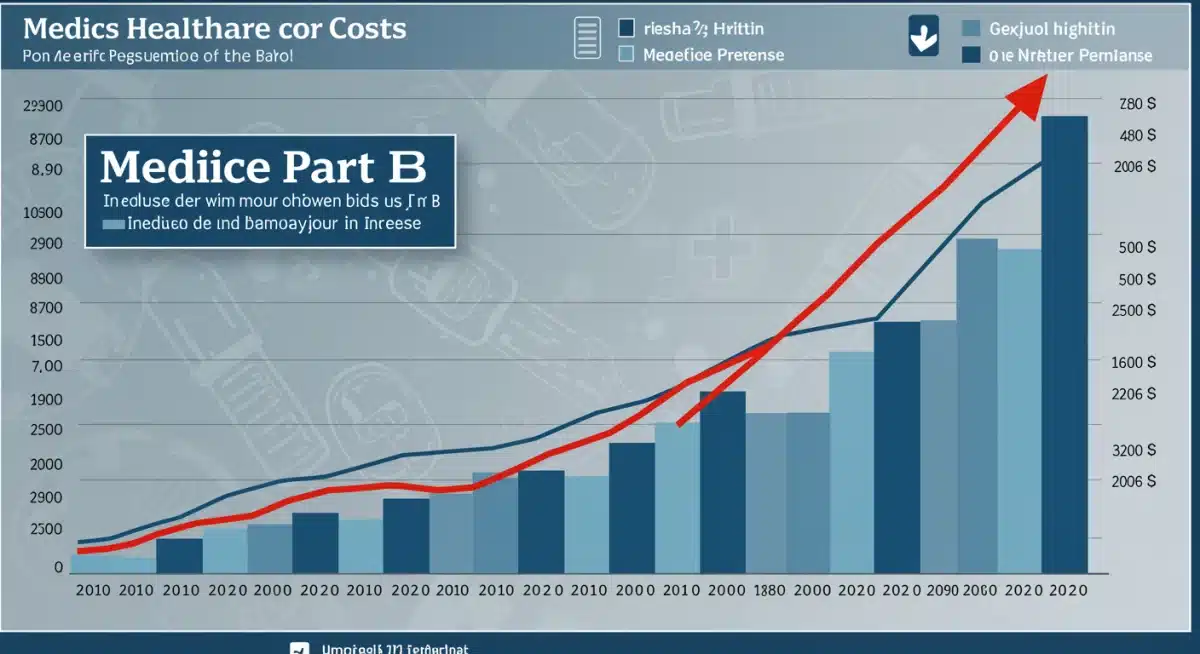
The Income-Related Monthly Adjustment Amount (IRMAA) also impacts some beneficiaries. Higher-income individuals pay a higher Part B premium, and the income thresholds for IRMAA are adjusted annually. Changes to these thresholds or the IRMAA structure itself could affect a significant portion of beneficiaries, contributing to the overall picture of 2026 Medicare Part B premium increases. These adjustments are a way to ensure that those with greater financial capacity contribute more to the program.
In summary, the 2026 Medicare Part B premium increases will likely result from a confluence of economic pressures, healthcare spending trends, legislative decisions, and the financial status of the Medicare trust fund. Keeping an eye on these overarching factors is crucial for anyone looking to forecast their future healthcare expenses.
Projected 2026 Medicare Part B Premium Increases: What to Expect
While precise figures for the 2026 Medicare Part B premium increases are not yet available, we can analyze historical trends and current projections to form reasonable expectations. The Centers for Medicare & Medicaid Services (CMS) typically announces these figures in the fall of the preceding year, providing a crucial window for financial planning. However, understanding the trajectory can help you prepare mentally and financially.
Historically, Medicare Part B premiums have seen gradual but consistent increases, with occasional larger jumps influenced by specific events or legislative actions. For example, significant drug cost increases or changes in healthcare utilization can push premiums higher. The pandemic, for instance, introduced volatility in healthcare spending and utilization, which has downstream effects on future premium settings.
Understanding the premium calculation process
The premium amount is determined by several factors, including:
- The ‘hold harmless’ provision: This provision protects most beneficiaries from a reduction in their Social Security benefits due to a Part B premium increase, meaning their Part B premium cannot increase by more than the dollar increase in their Social Security benefit. However, this does not apply to all beneficiaries, especially those not receiving Social Security, those with higher incomes (subject to IRMAA), or those newly enrolling in Part B.
- General revenue contributions: A significant portion of Medicare Part B is funded by general revenue from the federal government, not just premiums. The balance between these funding sources can shift, impacting premium levels.
- Medical cost inflation: The rising cost of medical services, technology, and prescription drugs is a constant upward pressure on premiums.
It’s reasonable to anticipate that the 2026 Medicare Part B premium increases will follow this general pattern of incremental growth, potentially influenced by ongoing inflation and the evolving cost of medical care. While a dramatic surge is not typically the norm, even modest increases can accumulate over time, impacting fixed incomes. Therefore, budgeting for a slight to moderate increase is a prudent approach.
Beneficiaries should also consider how their income might affect their premiums. The Income-Related Monthly Adjustment Amount (IRMAA) means that individuals with higher incomes pay a larger Part B premium. If your income has increased or is projected to increase, you might move into a higher IRMAA bracket, leading to a more substantial premium increase than the base rate. Monitoring your income levels in relation to the IRMAA thresholds is an important part of anticipating your specific 2026 Medicare Part B premium increases.
In conclusion, while specific numbers for 2026 are still pending, historical trends, economic indicators, and the structure of Medicare funding suggest that beneficiaries should prepare for continued, albeit potentially moderate, increases in Part B premiums. Proactive monitoring of official announcements and personal income levels will be crucial.
Strategies for Managing Your Healthcare Budget Amidst Increases
Facing potential 2026 Medicare Part B premium increases requires a proactive approach to managing your overall healthcare budget. While you cannot control the premium adjustments themselves, you can implement strategies to mitigate their financial impact and ensure your healthcare remains affordable and accessible. Effective planning involves reviewing your current coverage, exploring supplemental options, and maximizing preventive care.
One of the most immediate steps is to conduct a thorough review of your current Medicare coverage. This includes not only Part B but also any Part D prescription drug plan and Medigap policy or Medicare Advantage plan. Understanding how these pieces fit together can reveal opportunities for optimization. For instance, comparing Part D plans annually can lead to significant savings on prescription costs, which indirectly helps offset Part B premium increases.
Exploring supplemental coverage options
- Medicare Advantage (Part C): These plans often include Part A, Part B, and typically Part D coverage, along with additional benefits like vision, dental, and hearing. Some plans may have lower or even $0 premiums, though they operate within a network and may have different cost-sharing structures.
- Medigap (Medicare Supplement Insurance): These policies help cover out-of-pocket costs not paid by Original Medicare, such as deductibles, copayments, and coinsurance. While Medigap plans have their own premiums, they can provide predictable costs and extensive coverage, reducing unexpected medical bills.
- State-specific programs: Many states offer programs to help low-income beneficiaries with Medicare costs, including premiums, deductibles, and copayments. Researching eligibility for these programs can provide substantial financial relief.
Maximizing preventive care is another powerful strategy. Medicare Part B covers a wide range of preventive services, often at no additional cost if you use in-network providers. Regular check-ups, screenings, and vaccinations can help detect health issues early, potentially preventing more serious and costly conditions down the line. Investing in your health through preventive measures is a smart financial move.

Beyond insurance and preventive care, consider reviewing your overall household budget. Look for areas where you can trim expenses to free up funds for increased healthcare costs. Even small adjustments can add up. Additionally, if you are still working, explore options for health savings accounts (HSAs) or other tax-advantaged savings vehicles that can be used for medical expenses in retirement. These tools can provide a valuable buffer against rising healthcare costs, including the 2026 Medicare Part B premium increases.
In conclusion, while the 2026 Medicare Part B premium increases may seem daunting, a combination of careful planning, exploring supplemental insurance, utilizing preventive care, and smart budgeting can help you effectively manage your healthcare expenses and maintain financial stability.
The Role of IRMAA in 2026 Premium Adjustments
The Income-Related Monthly Adjustment Amount (IRMAA) plays a significant role in determining what many higher-income Medicare beneficiaries pay for their Part B premiums. As we look towards the 2026 Medicare Part B premium increases, understanding how IRMAA works and its potential adjustments is crucial for a complete picture of your future healthcare budget. IRMAA ensures that individuals with higher incomes contribute a larger share towards their Medicare Part B and Part D costs.
IRMAA is a surcharge added to your standard Part B premium. The Social Security Administration (SSA) determines if you owe IRMAA based on your modified adjusted gross income (MAGI) from two years prior. For 2026 premiums, the SSA will typically look at your 2024 tax returns. This look-back period is important because significant changes in income between 2024 and 2026 could impact your premium obligations.
IRMAA income thresholds and tiers
IRMAA is structured into several income tiers, with each tier corresponding to a different surcharge amount. The income thresholds for these tiers are adjusted annually, usually for inflation. These adjustments are critical, as even a small increase in your income could push you into a higher IRMAA bracket, resulting in a more substantial premium increase than the base premium increase alone.
- Tiered system: IRMAA applies different surcharges based on specific income brackets. The higher your income, the higher the additional premium.
- Annual adjustments: Income thresholds are subject to annual changes, meaning what qualified you for a certain tier in one year might differ in another.
- Life-changing events: If you experience a significant life event that reduces your income (e.g., retirement, divorce, loss of a spouse), you can request a new IRMAA determination from the SSA. This is an important consideration for those anticipating a lower income.
The interaction between the standard 2026 Medicare Part B premium increases and IRMAA means that higher-income beneficiaries might face a double impact. Not only will the base premium likely increase, but if your income pushes you into a higher IRMAA bracket, the total increase could be more substantial. This underscores the importance of monitoring your MAGI and understanding the IRMAA thresholds as they are announced.
For those nearing retirement or experiencing significant life changes, proactively assessing how these events might affect your MAGI is essential. For example, if you retire in 2025, your 2024 income might still place you in a higher IRMAA bracket for 2026, even if your current income is lower. Filing an appeal with the SSA based on a life-changing event can help ensure your IRMAA is based on your current financial situation, rather than outdated income data.
In conclusion, IRMAA is a fundamental component of Medicare Part B premium calculations for many. As we approach 2026, understanding its tiered structure, annual adjustments, and the impact of life-changing events is vital for higher-income beneficiaries to accurately project their total 2026 Medicare Part B premium increases and plan accordingly.
The ‘Hold Harmless’ Provision and Its Limitations
The ‘hold harmless’ provision is a critical protection for many Medicare Part B beneficiaries, designed to prevent their Social Security benefits from decreasing due to a Part B premium increase. However, it’s essential to understand that this provision has significant limitations and does not apply to everyone, especially when considering the 2026 Medicare Part B premium increases. Misunderstanding these limitations can lead to unexpected financial burdens.
Under the ‘hold harmless’ rule, if your Medicare Part B premium increases, your monthly Social Security benefit cannot be reduced. The premium increase is capped at the dollar amount of your Social Security cost-of-living adjustment (COLA). This means that for beneficiaries protected by this provision, their net Social Security check will either stay the same or increase, even with a premium hike.
Who is not protected by ‘hold harmless’?
- New Medicare enrollees: Individuals who are new to Medicare Part B in 2026 will pay the full standard premium, regardless of their Social Security COLA.
- High-income earners: Those subject to the Income-Related Monthly Adjustment Amount (IRMAA) are not protected by the ‘hold harmless’ provision. Their premiums can increase by the full amount of the standard premium increase plus their IRMAA surcharge.
- Beneficiaries not receiving Social Security benefits: If you are enrolled in Part B but not yet receiving Social Security benefits (e.g., you are still working), you are not protected. You will pay the full premium increase.
- Beneficiaries whose premiums are paid by Medicaid: If your state Medicaid program pays your Part B premiums, you are not subject to the ‘hold harmless’ provision, as the premium increase does not directly impact your Social Security benefit.
For those not covered by the ‘hold harmless’ provision, the full impact of the 2026 Medicare Part B premium increases will be felt directly. This group includes a growing number of beneficiaries, particularly those with higher incomes or those delaying Social Security claims. Therefore, it’s crucial for these individuals to pay close attention to premium announcements and budget accordingly.
Even for those protected, the ‘hold harmless’ provision doesn’t eliminate the premium increase; it merely limits how much of your Social Security benefit it can consume. The underlying cost of Medicare Part B still rises, and this can affect the overall financial solvency of the program. Moreover, if your Social Security COLA is small, even a protected increase can still feel substantial relative to your total benefit. Understanding who is affected and who is not is key to accurately forecasting your personal financial outlook.
In conclusion, while the ‘hold harmless’ provision offers a valuable safety net for many, its limitations mean that a significant portion of beneficiaries will experience the full force of the 2026 Medicare Part B premium increases. It is imperative for all Medicare enrollees to understand their individual situation relative to this provision to avoid unexpected financial surprises.
Preparing Your Healthcare Budget for 2026
Proactive preparation is paramount when anticipating the 2026 Medicare Part B premium increases. Developing a robust healthcare budget now can help you absorb potential cost hikes without undue financial strain. This involves a comprehensive review of your income, expenses, and potential avenues for savings and support. Don’t wait until the official announcements; begin your planning today.
Start by analyzing your current income sources. This includes Social Security, pensions, investments, and any part-time work. Understand how stable these sources are and if there are any anticipated changes. Simultaneously, meticulously track your current expenses, distinguishing between fixed and variable costs. This detailed financial snapshot forms the foundation upon which you can build a resilient budget.
Key steps for budget preparation
- Review income and expenses: Create a detailed budget that accounts for all income and expenditures. Identify areas where you can potentially cut back if needed.
- Factor in potential increases: Based on historical trends and general economic outlook, estimate a reasonable percentage increase for your Part B premiums. It’s often better to slightly overestimate than to be caught unprepared.
- Emergency fund assessment: Ensure you have an adequate emergency fund to cover unexpected medical costs or a period of higher premiums. Aim for at least 3-6 months of living expenses.
- Explore assistance programs: Investigate if you qualify for any state or federal programs that help with Medicare costs, such as Medicare Savings Programs (MSPs) or prescription drug assistance.
Consider consulting with a financial advisor who specializes in retirement planning and healthcare costs. They can provide personalized advice, help you navigate complex Medicare options, and identify strategies tailored to your specific financial situation. A professional perspective can be invaluable in optimizing your budget and ensuring long-term financial health, especially with the uncertainties surrounding the 2026 Medicare Part B premium increases.
Additionally, stay informed about official announcements from the Centers for Medicare & Medicaid Services (CMS) and the Social Security Administration (SSA). These agencies will release the definitive figures for 2026 premiums in the fall of 2025. Subscribing to their newsletters or checking their official websites periodically can ensure you receive the most accurate and up-to-date information, allowing you to finalize your budget adjustments.
In conclusion, preparing your healthcare budget for 2026 involves a multi-pronged approach: understanding your current financial landscape, estimating future costs, exploring all available support, and staying informed. By taking these steps, you can confidently navigate the 2026 Medicare Part B premium increases and maintain control over your healthcare finances.
Long-Term Outlook for Medicare Part B Premiums
Beyond the immediate concern of the 2026 Medicare Part B premium increases, it is prudent to consider the long-term outlook for these costs. Understanding the broader trends and challenges facing Medicare can help beneficiaries and future enrollees plan for sustainable healthcare funding over many years. The trajectory of Part B premiums is influenced by demographic shifts, healthcare innovation, and the overall economic health of the nation.
The aging of the baby-boomer generation continues to place increasing demand on Medicare services. As more individuals enter retirement and live longer, healthier lives, the number of beneficiaries requiring Part B coverage grows. This demographic shift inherently increases the total cost of the program, which is often reflected in incremental premium adjustments over time. This trend is expected to continue for the foreseeable future.
Challenges and considerations for the future
- Medical advancements: While beneficial, new drugs, treatments, and diagnostic technologies often come with high price tags, contributing to rising healthcare costs that impact Part B premiums.
- Inflationary pressures: Persistent inflation across the economy can lead to higher operational costs for healthcare providers, which in turn can be passed on to Medicare and its beneficiaries.
- Trust fund solvency: The long-term solvency of the Medicare trust funds is a recurring concern. While Part B is funded differently than Part A, its financial health is intertwined with the overall sustainability of the Medicare program.
- Legislative reforms: Future legislative actions could significantly alter the structure and funding of Medicare, potentially impacting premiums. These could range from minor adjustments to comprehensive reforms.
Given these factors, it is reasonable to anticipate a continued upward trend in Medicare Part B premiums in the years following 2026. While the rate of increase may vary, a return to significant decreases is unlikely without substantial policy changes or unforeseen economic shifts. Therefore, a long-term financial plan should incorporate assumptions of gradually increasing healthcare costs.
For individuals planning for retirement, this long-term outlook underscores the importance of robust savings and investment strategies specifically earmarked for healthcare expenses. Health Savings Accounts (HSAs), if eligible, can be particularly valuable tools, offering tax advantages for healthcare savings. Additionally, staying engaged with policy discussions around Medicare reform can provide insights into potential future changes that might affect your premiums and benefits.
In conclusion, the long-term outlook suggests that Medicare Part B premiums will likely continue to rise beyond the 2026 Medicare Part B premium increases. This necessitates a proactive and forward-thinking approach to financial planning, incorporating realistic projections for healthcare costs and exploring all available avenues for savings and support to ensure financial security in retirement.
| Key Aspect | Brief Description |
|---|---|
| Premium Increases | Anticipate gradual but consistent increases in 2026 Medicare Part B premiums due to various factors. |
| Influencing Factors | Inflation, healthcare utilization, medical advancements, and legislative changes drive premium adjustments. |
| IRMAA Impact | Higher-income beneficiaries pay increased premiums via IRMAA, subject to annual income threshold adjustments. |
| Planning Strategies | Review coverage, explore supplemental options, maximize preventive care, and budget proactively. |
Frequently Asked Questions About 2026 Medicare Part B Premiums
The Centers for Medicare & Medicaid Services (CMS) typically announces the official Medicare Part B premium amounts for the upcoming year in the fall of the preceding year. So, for 2026, expect the announcement around October or November 2025.
The ‘hold harmless’ provision prevents your Social Security benefit from decreasing due to a Part B premium increase. It protects most beneficiaries, but not those new to Medicare, high-income earners (IRMAA), or those not receiving Social Security benefits.
Your modified adjusted gross income (MAGI) from two years prior (i.e., 2024 for 2026 premiums) determines if you pay an Income-Related Monthly Adjustment Amount (IRMAA). Higher incomes result in higher Part B premiums, a crucial aspect of 2026 Medicare Part B premium increases.
You can review your current budget, explore supplemental coverage like Medicare Advantage or Medigap, maximize preventive care, and assess eligibility for assistance programs. Proactive planning helps manage the impact of 2026 Medicare Part B premium increases.
Yes, Medicare Savings Programs (MSPs) can help low-income beneficiaries with Part B premiums, deductibles, and coinsurance. Eligibility varies by state and income level. It’s advisable to check with your state’s Medicaid office for specific details.
Conclusion
Navigating the complexities of Medicare, particularly understanding and preparing for the 2026 Medicare Part B premium increases, is an essential component of sound financial planning for millions of Americans. While the precise figures are yet to be released, the confluence of historical trends, economic factors, and legislative frameworks strongly suggests a continuation of upward adjustments. By grasping the fundamentals of Part B, recognizing the drivers behind premium changes, and understanding the nuances of provisions like IRMAA and ‘hold harmless,’ beneficiaries can adopt proactive strategies to manage their healthcare budgets effectively. From reviewing current coverage and exploring supplemental options to maximizing preventive care and seeking professional financial advice, taking deliberate steps now will empower you to face future healthcare costs with greater confidence and maintain financial stability in the years to come.
