New FAFSA Changes 2026-2027: Maximize Your Federal Student Aid

The upcoming FAFSA changes for the 2026-2027 academic year introduce significant modifications to how federal student aid is calculated and awarded, necessitating proactive preparation from students and families to maximize their eligibility.
Preparing for higher education often involves navigating the complex world of financial aid, and the Free Application for Federal Student Aid (FAFSA) is the cornerstone of this process. The upcoming New FAFSA Changes for the 2026-2027 Academic Year: Maximizing Your Federal Student Aid will bring substantial modifications, impacting how millions of students qualify for grants, scholarships, work-study programs, and federal loans. Understanding these shifts early is crucial for families aiming to optimize their financial assistance.
Understanding the FAFSA Simplification Act
The FAFSA Simplification Act represents a monumental overhaul of the federal student aid system, designed to make the application process easier and more accessible for all students. This act, while having already initiated some changes in previous cycles, will see its full implementation and impact on the 2026-2027 academic year. Its primary goals are to streamline the application, expand eligibility for federal aid, and provide a more accurate assessment of a family’s ability to pay for college.
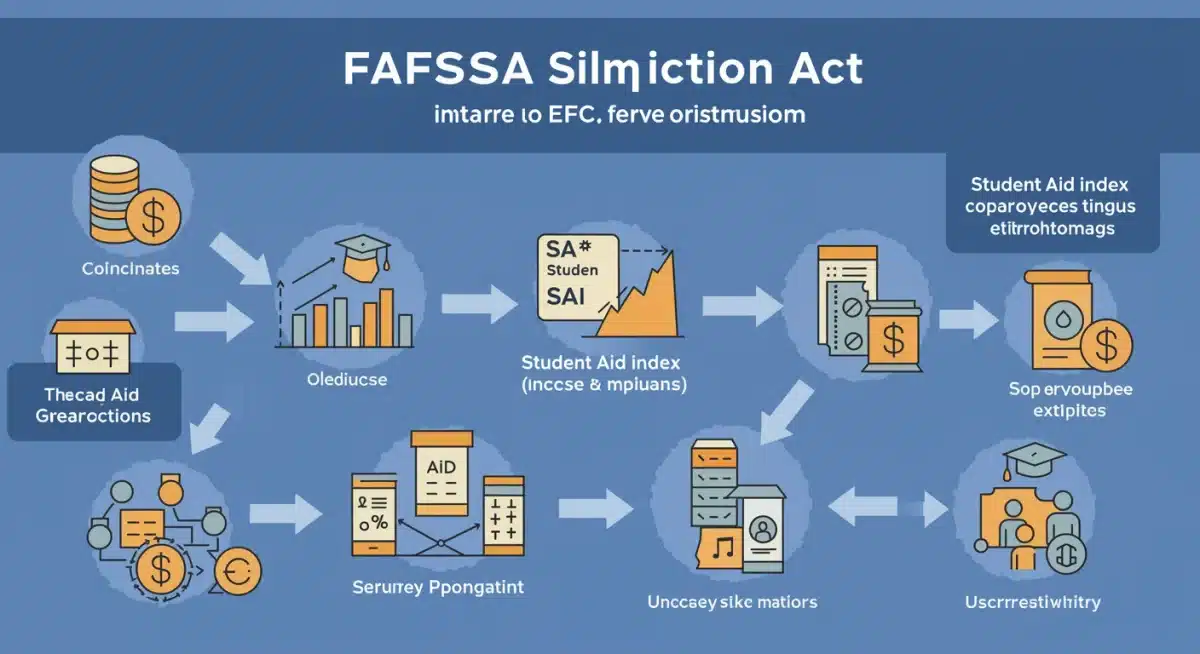
One of the most significant changes under this act is the replacement of the Expected Family Contribution (EFC) with the Student Aid Index (SAI). This shift is not merely a renaming; it involves a fundamental restructuring of how a student’s financial need is calculated. The SAI aims to offer a clearer picture of a family’s financial standing, potentially leading to more students qualifying for need-based aid. This re-evaluation of financial need is central to the act’s objective of widening access to higher education for a broader range of socioeconomic backgrounds.
Key Objectives of the Simplification Act
- Streamlined Application: Reducing the number of questions and simplifying the language on the FAFSA form.
- Expanded Eligibility: Modifying calculation methodologies to allow more students to qualify for federal aid, especially Pell Grants.
- Improved User Experience: Making the online application more intuitive and mobile-friendly.
- Greater Transparency: Providing clearer information about aid eligibility and award amounts.
The implications of these objectives are far-reaching. For example, a simpler application could reduce barriers for first-generation college students or those from families unfamiliar with the financial aid process. Expanded eligibility means that families who previously thought they wouldn’t qualify for significant aid might now find themselves in a better position. Ultimately, the FAFSA Simplification Act seeks to create a more equitable and understandable path to college financing for everyone.
The New Student Aid Index (SAI) vs. EFC
The transition from the Expected Family Contribution (EFC) to the Student Aid Index (SAI) is perhaps the most impactful change for the 2026-2027 FAFSA cycle. While both metrics aim to determine a family’s financial strength, the SAI introduces several critical adjustments that will alter aid eligibility for many. Understanding these differences is paramount for students and parents as they prepare to apply for federal assistance.
The EFC, traditionally, was a dollar amount representing what a family was expected to contribute toward college costs. However, the SAI is a different beast. It can be a negative number, ranging from -1500 to a positive value, indicating a student’s maximum eligibility for need-based aid. A negative SAI signifies that a student has a very high financial need, potentially qualifying them for the maximum Pell Grant award and other forms of assistance. This change is particularly beneficial for low-income students, as it more accurately reflects their financial circumstances and aims to prevent them from being overlooked for crucial aid.
Key Differences in Calculation
- Negative SAI Possible: Unlike the EFC, the SAI can go below zero, indicating high financial need.
- Child Support: Child support received is no longer counted as untaxed income on the FAFSA, which can significantly lower a family’s SAI.
- Family Size Definition: The FAFSA will now pull family size directly from federal tax returns, which could impact eligibility for some families.
- Number of Students in College: The previous EFC calculation divided the EFC by the number of children in college. The SAI calculation eliminates this benefit, meaning families with multiple children in college may see a higher SAI per student.
The elimination of the aid calculation benefit for multiple children in college is a point of concern for some families. While the overall goal is to simplify and expand aid, this specific change might lead to a higher SAI for families with more than one student simultaneously pursuing higher education. It’s essential for these families to proactively explore other aid avenues, such as institutional scholarships or state-specific programs, to mitigate the potential impact of this adjustment. The SAI’s new methodology, while designed to be more equitable for many, requires careful consideration of individual family circumstances.
Impact on Pell Grant Eligibility
The FAFSA Simplification Act, and specifically the introduction of the Student Aid Index (SAI), is poised to significantly expand Pell Grant eligibility for many students, particularly those from lower-income backgrounds. The Pell Grant, a cornerstone of federal student aid, is often considered ‘gift aid’ because it does not need to be repaid. Therefore, understanding how these changes will affect access to Pell Grants is critical for maximizing federal student aid.
Under the new system, more students will qualify for the maximum Pell Grant award. This is largely due to two key factors: the ability for the SAI to be a negative number (as low as -1500), and the direct linkage of Pell Grant eligibility to federal poverty levels and family size. Students whose SAI is very low or negative will be automatically eligible for the maximum Pell Grant, regardless of the cost of attendance at their chosen institution. This simplified approach aims to provide a clearer and more predictable path to securing this vital financial assistance.

New Pell Grant Eligibility Criteria
- Maximum Pell Grant: Automatic eligibility for maximum Pell based on a negative SAI or specific income thresholds relative to poverty levels.
- Minimum Pell Grant: Students with an SAI up to certain limits, even if not qualifying for the maximum, may still be eligible for a partial Pell Grant.
- Direct Certification: Some students, such as those experiencing homelessness or foster youth, will have simplified pathways to Pell Grant eligibility.
The changes also introduce a clearer pathway for students to receive a minimum Pell Grant. Even if a student’s SAI doesn’t qualify them for the maximum award, they might still receive a partial Pell Grant based on specific income criteria and their cost of attendance. This broadens the reach of the Pell Grant program, ensuring that more students receive some level of non-repayable aid to help cover their educational expenses. For families, this means a greater likelihood of receiving foundational support, reducing the need for loans and making college more affordable.
Strategies for Maximizing Your Aid in 2026-2027
With the significant FAFSA changes for the 2026-2027 academic year, students and families need to adopt new strategies to effectively maximize their federal student aid. Proactive planning and a thorough understanding of the updated rules are more important than ever. Simply filling out the form without considering the underlying changes could lead to missed opportunities for vital financial assistance.
One of the most crucial strategies involves understanding how assets are now treated. While some assets remain untaxed, others can impact your SAI. It’s wise to review family savings and investment accounts well in advance of the application period. Consulting with a financial advisor specializing in college planning can provide personalized guidance, helping you structure your finances in a way that is most favorable for FAFSA calculations without compromising your long-term financial health. Remember, the FAFSA uses prior-prior year tax information, so financial decisions made today can affect aid eligibility for future academic years.
Key Strategies to Consider
- Early Preparation: Gather all necessary financial documents, including tax returns and bank statements, well before the FAFSA opens.
- Understand SAI Impact: Familiarize yourself with the new Student Aid Index calculation to anticipate your potential aid eligibility.
- Review Asset Allocation: Understand which assets count towards SAI and consider strategies like 529 plans, which are generally treated favorably.
- File On Time: Many state and institutional aid programs have early deadlines, so submitting your FAFSA as soon as it opens is crucial.
Another important strategy is to communicate openly with college financial aid offices. They are often the best resource for understanding how federal changes interact with institutional aid policies. Some colleges have specific forms or requirements in addition to the FAFSA, and being aware of these can prevent delays or overlooked aid opportunities. Don’t hesitate to ask questions about appeals processes if your financial situation changes unexpectedly or if you believe your initial aid offer doesn’t accurately reflect your family’s circumstances. Maximizing aid is an ongoing process that extends beyond the initial application.
Navigating the Simplified FAFSA Application Process
The FAFSA Simplification Act aims to make the application process much less daunting for students and families. For the 2026-2027 academic year, applicants can expect a more streamlined experience with fewer questions and clearer instructions. While the intent is to simplify, understanding the nuances of the new process is still essential to ensure accuracy and maximize federal student aid.
One primary change is the reduction in the number of questions on the FAFSA form. This is a welcome development for many, as the previous version could be perceived as overly complex and time-consuming. The simplified form intends to reduce errors and encourage more students to complete the application. However, fewer questions don’t necessarily mean less importance for each one. Every piece of information provided will contribute to the SAI calculation, so accuracy remains paramount.
Key Aspects of the New Application
- Fewer Questions: A significantly reduced number of questions to answer, making the form quicker to complete.
- Direct Data Exchange: Increased reliance on direct data exchange with the IRS for tax information, reducing manual entry errors.
- Contributor Model: Introduction of the ‘contributor’ concept, where anyone required to provide financial information (e.g., parents, stepparents) must consent to share data.
- Mobile-Friendly Interface: Improved online experience designed for easier navigation on various devices.
The ‘contributor’ model is a significant procedural change. All individuals designated as contributors (typically parents, and potentially stepparents, depending on marital status) will need to provide consent for their tax information to be directly transferred from the IRS into the FAFSA. This direct data exchange is designed to reduce the burden of manual input and improve accuracy. However, if a contributor refuses to provide consent, the student will not be eligible for federal student aid. Therefore, open communication and cooperation among family members are more crucial than ever to successfully complete the FAFSA and access federal student aid. Make sure all contributors understand their role and the importance of their consent.
Important Deadlines and What to Do Next
Understanding and adhering to deadlines is a critical component of maximizing your federal student aid for the 2026-2027 academic year. While the federal FAFSA deadline is typically later in the academic year, many states and individual colleges have their own, much earlier priority deadlines. Missing these can mean forfeiting access to valuable state-specific grants or institutional scholarships, even if you qualify for federal aid.
The FAFSA for the 2026-2027 academic year generally becomes available in October of 2025. This ‘opening’ date is not merely a suggestion; for many, it’s the target date for submission. Aid is often awarded on a first-come, first-served basis, especially for limited institutional funds. Therefore, submitting your FAFSA as soon as possible after it opens significantly increases your chances of receiving a more robust financial aid package. Begin gathering all necessary documentation, such as tax returns and bank statements, several months in advance to avoid last-minute rushes.
Your Next Steps for 2026-2027 Aid
- Create an FSA ID: Both the student and one parent (if applicable) need an FSA ID to access and sign the FAFSA. Create these well in advance.
- Gather Documents: Collect prior-prior year tax returns, W-2s, and records of untaxed income, as well as current asset information.
- Research State & College Deadlines: Identify and mark down all relevant state and institutional financial aid deadlines.
- Complete the FAFSA Early: Submit your FAFSA as close to the opening date (October 1, 2025) as possible.
After submitting your FAFSA, you will receive a FAFSA Submission Summary, which replaces the Student Aid Report (SAR). This summary will provide your Student Aid Index (SAI) and an estimate of your Pell Grant eligibility. Review this document carefully for any errors, as corrections can be made if needed. Subsequently, colleges to which you’ve applied will send you financial aid offer letters detailing the aid you’ve been awarded. Compare these offers carefully, considering the total cost of attendance and the types of aid (grants, scholarships, loans, work-study) offered. Don’t hesitate to contact the financial aid office at each institution if you have questions or need clarification on any aspect of your aid package, as understanding your options is key to making informed decisions about your educational future.
| Key Change | Brief Description |
|---|---|
| EFC Replaced by SAI | The Expected Family Contribution (EFC) is replaced by the Student Aid Index (SAI), which can be a negative number, indicating higher need. |
| Pell Grant Expansion | More students will qualify for maximum Pell Grants due to new eligibility criteria tied to federal poverty levels and SAI. |
| Simplified Application | The FAFSA form has fewer questions and a more intuitive, mobile-friendly interface for easier completion. |
| Contributor Consent | All financial contributors must provide consent for direct IRS data exchange; lack of consent means no federal aid. |
Frequently Asked Questions About FAFSA 2026-2027 Changes
The most significant change is the replacement of the Expected Family Contribution (EFC) with the Student Aid Index (SAI). The SAI uses a new calculation methodology and can even be a negative number, potentially increasing eligibility for need-based federal aid.
The FAFSA Simplification Act will expand Pell Grant eligibility. More students, especially those with high financial need or very low SAIs, will qualify for maximum Pell Grants, and a broader range will be eligible for partial awards based on income and poverty levels.
The FAFSA for the 2026-2027 academic year typically opens on October 1, 2025. It is highly recommended to submit your application as soon as possible after it opens, as many state and institutional aid programs have early deadlines and limited funds.
A ‘contributor’ is anyone required to provide financial information on the FAFSA, usually parents or stepparents. Their consent to share tax data directly from the IRS is mandatory for the student to be eligible for any federal student aid.
No, the new Student Aid Index (SAI) calculation eliminates the previous benefit of dividing the EFC by the number of children in college. This means families with multiple students in higher education might see a higher SAI per student than before.
Conclusion
The New FAFSA Changes for the 2026-2027 Academic Year: Maximizing Your Federal Student Aid represents a significant evolution in how federal student aid is distributed, aiming for greater equity and accessibility. The shift from EFC to SAI, coupled with a streamlined application and expanded Pell Grant eligibility, offers new opportunities for students seeking financial assistance for higher education. While the changes are designed to simplify the process, proactive engagement and a thorough understanding of the new rules are crucial. By familiarizing themselves with the Student Aid Index, understanding the ‘contributor’ model, and adhering to critical deadlines, students and families can strategically navigate these updates. This preparation will not only ensure a smoother application experience but also optimize their chances of securing the maximum federal student aid available, ultimately paving a more affordable path towards their educational aspirations.
