2026 Federal Minimum Wage Debate: Income & Spending Impact
The 2026 federal minimum wage debate could significantly alter household incomes and consumer spending, influencing economic stability and individual financial strategies across the United States.
The discussion surrounding the 2026 federal minimum wage debate: potential impact on your household income and spending is far more than just a political talking point; it’s a critical financial issue poised to reshape the economic landscape for millions of Americans. Understanding the nuances of this potential change is crucial for every household, as it could directly influence your budget, purchasing power, and long-term financial planning.
Understanding the Federal Minimum Wage Proposal for 2026
The movement to increase the federal minimum wage has gained considerable traction in recent years, driven by advocates who argue for a living wage and critics who express concerns about economic repercussions. As we approach 2026, proposals often suggest a gradual increase to a specific target, frequently cited as $15 per hour, though the exact figure remains subject to legislative negotiation and economic analysis.
This proposed increase isn’t just a simple adjustment; it represents a significant shift in labor policy that aims to lift millions of low-wage workers out of poverty. Proponents highlight studies suggesting that a higher minimum wage can reduce income inequality, stimulate consumer demand, and improve worker morale and productivity. However, opponents often point to potential downsides, such as job losses, increased automation, and inflationary pressures, particularly for small businesses. The debate is complex, balancing social equity against economic stability and business viability.
Historical Context of Minimum Wage Adjustments
To fully grasp the current debate, it’s essential to look back at the history of the federal minimum wage. Since its inception in 1938 as part of the Fair Labor Standards Act, the minimum wage has been adjusted periodically to keep pace with inflation and economic growth. However, these adjustments have not always been consistent, leading to periods where the real value of the minimum wage has eroded significantly.
- 1938: First federal minimum wage set at $0.25 per hour.
- Peak Real Value: The minimum wage reached its highest real value in 1968.
- Stagnation: Decades of infrequent increases have led to a decline in purchasing power.
- Current Rate: The federal minimum wage has been $7.25 per hour since 2009.
Understanding this historical context helps frame the current discussions, as advocates argue that the prolonged stagnation at $7.25 has made it increasingly difficult for individuals and families to meet basic living expenses, especially in areas with a high cost of living. The push for a 2026 increase is seen by many as an attempt to correct this historical imbalance and ensure that full-time work provides a pathway out of poverty.
The discussions around the 2026 federal minimum wage extend beyond simple numbers; they delve into the core principles of economic justice and opportunity. Policymakers are weighing the immediate benefits for low-income workers against the broader economic implications, including potential impacts on employment levels, business operating costs, and overall market stability. The outcome will undoubtedly shape the financial realities for a significant portion of the American workforce.
Direct Impact on Household Income and Purchasing Power
For households earning at or near the current federal minimum wage, an increase in 2026 would mean a direct and often substantial boost in their annual income. This influx of capital could significantly enhance their purchasing power, allowing them to better afford necessities and potentially improve their quality of life. The immediate effect would be felt most acutely by individuals and families who currently struggle to make ends meet, providing a much-needed financial buffer.
Consider a full-time worker currently earning $7.25 per hour. An increase to, for example, $15 per hour would nearly double their gross income. This isn’t just about having more disposable income; it’s about the ability to cover rent, groceries, healthcare, and transportation without constant financial strain. For many, it could mean moving out of poverty, reducing reliance on public assistance, and gaining greater financial independence.
Changes in Disposable Income and Savings
With an increased minimum wage, households would likely experience a notable change in their disposable income. This extra money could be allocated in several ways, each with its own set of economic implications.
- Increased Spending: A significant portion of the additional income would likely be spent on essential goods and services, stimulating local economies.
- Debt Reduction: Many individuals may use the extra funds to pay down high-interest debts, improving their credit scores and financial stability.
- Savings and Investments: Some households might be able to start or increase their savings, building an emergency fund or investing for the future.
- Reduced Financial Stress: The psychological benefit of reduced financial stress can lead to improved health and overall well-being.
The ability to save, even a small amount, can be transformative for low-income families, offering a safety net against unexpected expenses and a pathway towards long-term financial goals. This increase in savings could also contribute to broader economic stability by reducing the vulnerability of a significant segment of the population to economic shocks.
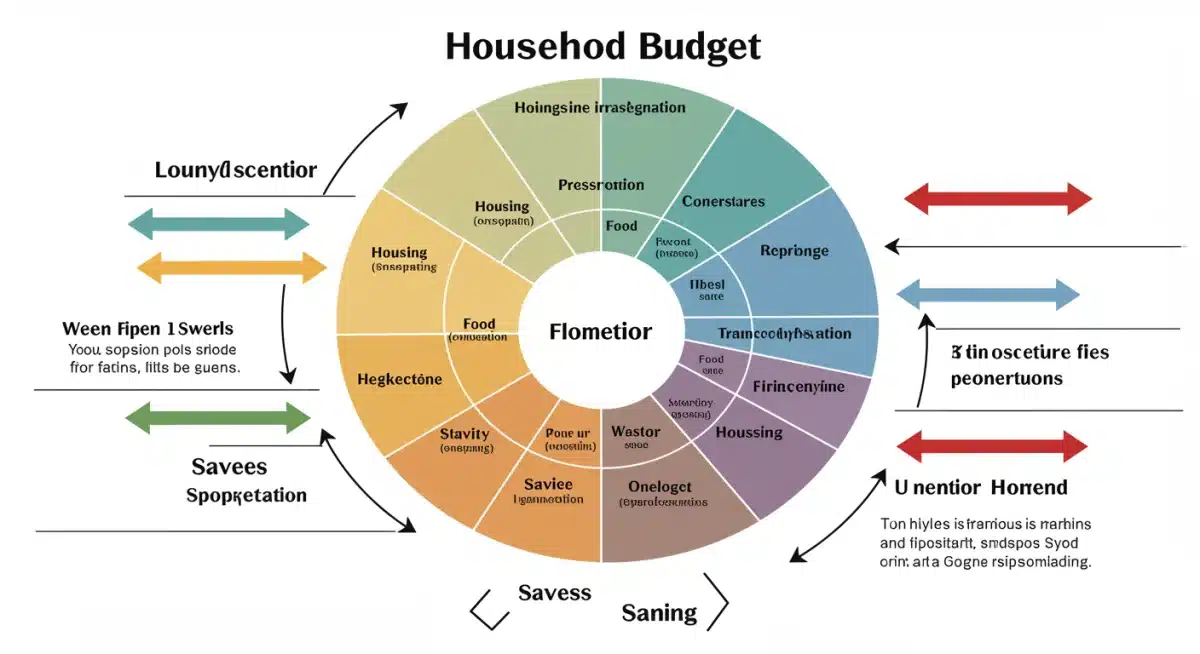
Furthermore, the ripple effect of increased purchasing power extends beyond individual households. When low-income workers have more money to spend, businesses that cater to these consumers often see an uptick in sales. This can lead to increased profits, which in turn might allow businesses to expand, hire more staff, or invest in their operations, creating a virtuous cycle of economic growth. The direct injection of funds into the economy at the grassroots level can be a powerful engine for recovery and expansion, particularly in communities where economic activity has been sluggish.
The direct impact of an increased federal minimum wage on household income and purchasing power is arguably the most immediate and tangible benefit. It offers a promise of greater financial security and an improved standard of living for those who need it most, while also potentially catalyzing broader economic benefits through increased consumer demand and local business growth. However, it is essential to consider this alongside other potential economic shifts.
Potential Shifts in Consumer Spending Habits
An increase in the federal minimum wage in 2026 would undoubtedly lead to significant shifts in consumer spending habits, particularly among the lower and middle-income brackets. With more disposable income, households would likely re-evaluate their budgets and allocate funds differently, impacting various sectors of the economy. This shift could manifest in increased spending on essential goods, improved access to services, and even a reallocation towards non-essential items previously out of reach.
Initially, a substantial portion of the additional income would likely be directed towards immediate necessities. This includes higher-quality groceries, better housing conditions, improved transportation, and potentially more regular access to healthcare. This fundamental improvement in the ability to meet basic needs can have a profound positive impact on the well-being and stability of families, reducing the daily stress associated with financial scarcity.
Impact on Discretionary Spending and Local Economies
Beyond essentials, a higher minimum wage could also free up funds for discretionary spending, which can significantly benefit local economies. This includes spending on:
- Dining Out: More frequent visits to restaurants and cafes, supporting local food service industries.
- Entertainment: Increased spending on movies, concerts, and other leisure activities.
- Retail: Greater purchases of clothing, electronics, and other consumer goods, boosting retail sales.
- Services: Increased demand for personal services like haircuts, childcare, and home maintenance.
This increased discretionary spending acts as a powerful stimulant for small businesses, which often rely heavily on local consumer demand. When consumers have more money to spend, these businesses thrive, leading to job creation and further economic growth within communities. The multiplier effect of this spending means that every dollar earned by minimum wage workers can generate several dollars in economic activity as it circulates through the local economy.
However, it’s also important to consider how businesses might adapt to increased labor costs. Some firms might pass on a portion of these costs to consumers through slightly higher prices, leading to a degree of inflation. While this could temper the purchasing power gains to some extent, economic studies often suggest that the benefits of increased wages for low-income workers tend to outweigh the negative effects of moderate price increases, especially when considering the overall improvement in living standards and reduction in poverty.
The potential shifts in consumer spending habits are a crucial aspect of the 2026 federal minimum wage debate. While there are legitimate concerns about potential price increases, the overall expectation is that a significant portion of the additional income would flow back into the economy, boosting demand and supporting local businesses. This dynamic interplay between wages, spending, and economic growth is central to understanding the broader impact of such a policy change on American households.
Business Responses and Employment Implications
The prospect of a higher federal minimum wage in 2026 naturally prompts businesses to consider their operational strategies and potential adjustments. The response from employers can vary significantly depending on their industry, size, profit margins, and local economic conditions. While some businesses may absorb increased labor costs, others might implement changes to maintain profitability, which could have diverse employment implications across different sectors.
Small businesses, in particular, often face tighter margins and might find it more challenging to absorb substantial wage increases without making adjustments. These adjustments could range from slight price increases to more fundamental changes in staffing or operational efficiency. The key is how businesses strategically adapt to the new wage environment to ensure their continued viability while complying with federal regulations.
Strategies Businesses Might Employ
To mitigate the impact of increased labor costs, businesses could adopt several strategies. Understanding these potential responses is vital for assessing the overall employment implications.
- Price Adjustments: Many businesses may slightly increase the prices of their goods and services to offset higher wage expenses.
- Efficiency Improvements: Investing in technology and automation to reduce labor needs or improve productivity per worker.
- Staffing Changes: This could involve reducing the number of employees, cutting back on employee hours, or slowing down hiring.
- Benefit Reductions: Some businesses might adjust other employee benefits to balance the increase in base wages.
The fear of widespread job losses is a common argument against minimum wage increases. However, economic research on this topic is often mixed. Some studies suggest minimal job losses, especially when increases are gradual and predictable, allowing businesses time to adapt. Other studies point to more significant impacts, particularly in industries with low profit margins or those highly reliant on low-wage labor, such as fast food or retail.
Moreover, some businesses might view a higher minimum wage as an opportunity to attract and retain better talent, leading to lower turnover rates and increased worker productivity. A more stable and motivated workforce can reduce training costs and improve service quality, potentially offsetting some of the initial wage increase. This perspective highlights that the impact isn’t solely about cost, but also about the value of human capital.
Ultimately, the business response to a 2026 federal minimum wage increase will be a complex interplay of economic factors, competitive pressures, and strategic decisions. While some sectors may experience challenges, others might adapt successfully, potentially leading to a more skilled and stable workforce. The overall employment implications will depend on the scale of the increase, the pace of implementation, and the broader economic climate at the time.
Inflationary Pressures and Economic Stability
One of the most frequently cited concerns regarding a federal minimum wage increase in 2026 is its potential to fuel inflation and disrupt overall economic stability. The argument posits that businesses, faced with higher labor costs, will pass these expenses onto consumers through increased prices for goods and services. This widespread price hike, if significant enough, could erode the purchasing power gains of the wage increase, leading to a cycle where higher wages are chased by higher costs.
However, the actual inflationary impact of minimum wage increases is a subject of ongoing debate among economists. While some degree of price adjustment is likely, the extent to which it triggers broad-based inflation is often questioned. Many studies suggest that the inflationary effect of a moderate minimum wage hike is relatively small and manageable, especially in a large, diverse economy like the United States.
Factors Mitigating Inflationary Impact
Several factors can mitigate the inflationary pressures associated with a federal minimum wage increase. Understanding these can provide a more nuanced view of the economic stability argument.
- Productivity Gains: Higher wages can lead to increased worker morale and productivity, partially offsetting labor costs.
- Reduced Turnover: Lower employee turnover reduces hiring and training costs for businesses.
- Profit Absorption: Some businesses, particularly larger corporations, may absorb increased labor costs through slightly reduced profit margins rather than raising prices significantly.
- Increased Demand: The boost in consumer demand from higher wages can support economic growth, potentially absorbing some price adjustments.
Furthermore, the overall economic environment plays a crucial role. If the economy is operating below its full potential, a minimum wage increase could stimulate demand without necessarily triggering runaway inflation. Conversely, in an economy already experiencing high demand and tight labor markets, the inflationary impact might be more pronounced. The Federal Reserve’s monetary policy also influences how inflationary pressures are managed.
It’s also worth noting that not all businesses will respond to increased labor costs in the same way. Companies with strong brand loyalty or unique products might be better positioned to pass on costs, while those in highly competitive markets might opt to absorb costs to maintain market share. This varied response suggests that the inflationary impact will not be uniform across all sectors or regions.
The discussion around inflation and economic stability in the context of the 2026 federal minimum wage debate is multifaceted. While the potential for some price increases exists, many economists believe that the overall impact on broad inflation can be contained, especially when considering the benefits of increased purchasing power and reduced poverty. A balanced approach that considers both the benefits and potential risks is essential for informed policymaking.
Regional Disparities and Cost of Living
The effectiveness and impact of a uniform federal minimum wage increase in 2026 are heavily influenced by the vast regional disparities and varying costs of living across the United States. A wage that might be considered a living wage in a rural area with a lower cost of living could still fall short of providing financial stability in an expensive metropolitan area. This creates a complex challenge for policymakers seeking to implement a single national standard.
For instance, an increase to $15 per hour might be a significant boost for workers in states like Mississippi or Arkansas, where the current cost of living is relatively low. In these regions, such a wage could dramatically improve individual and household financial situations, allowing for greater access to housing, food, and other necessities. The economic stimulus from increased local spending could be substantial.
Challenges in High-Cost-of-Living Areas
Conversely, in high-cost-of-living areas such as New York City, San Francisco, or Washington D.C., a $15 minimum wage, while an improvement, might still not be enough to cover basic expenses like rent, which can consume a disproportionately large share of income. This disparity highlights the limitations of a one-size-fits-all approach to minimum wage policy. Many of these areas already have local or state minimum wages set above the current federal rate, often exceeding the proposed federal increase.
- Housing Costs: A primary driver of cost of living differences, making a uniform wage less impactful in expensive cities.
- Local Ordinances: Many cities and states have already implemented their own higher minimum wages to address local economic realities.
- Small Business Strain: Businesses in high-cost areas might face a double burden of higher wages and already elevated operating expenses.
- Commuting Challenges: Workers in high-cost areas often face longer, more expensive commutes if they cannot afford to live near their jobs.
The debate often includes discussions about whether a tiered minimum wage system, perhaps indexed to regional cost of living, would be a more equitable and effective solution. However, implementing such a system presents its own set of administrative and political challenges. The simplicity of a single federal standard is appealing, but its practical application across such a diverse economic landscape remains a point of contention.
Understanding the regional disparities and cost of living is crucial when evaluating the potential impact of the 2026 federal minimum wage. While a federal increase aims to create a baseline of financial security, its real-world effect will vary significantly depending on where individuals live and work. This calls for a nuanced perspective that acknowledges both the universal benefits and the specific challenges posed by a uniform national policy.
Long-Term Financial Planning for Households
For households across the United States, the 2026 federal minimum wage debate isn’t just about immediate income changes; it’s about the long-term implications for financial planning. Whether your household directly benefits from a wage increase or experiences indirect effects through price adjustments, adapting your financial strategy is essential. Proactive planning can help individuals and families maximize potential gains and mitigate any adverse impacts, ensuring greater financial resilience in the years to come.
For those expecting a direct increase in income, the opportunity to improve long-term financial health is significant. This newfound capacity to save, invest, or reduce debt can set the stage for greater economic security down the line. Conversely, even households not directly affected by the minimum wage increase should consider how broader economic shifts, such as potential inflation or changes in employment trends, might influence their financial outlook.
Key Areas for Financial Adjustment
Regardless of how the 2026 federal minimum wage impacts your specific situation, several areas of financial planning warrant attention:
- Budget Reassessment: Review and adjust your household budget to reflect any changes in income or expenses, prioritizing savings and debt repayment.
- Emergency Fund: Strengthen or establish an emergency fund to cover 3-6 months of living expenses, providing a crucial safety net.
- Debt Management: Prioritize paying down high-interest debt, such as credit card balances, to reduce financial burden and free up cash flow.
- Retirement Planning: Increase contributions to retirement accounts (401(k), IRA) if possible, leveraging the power of compound interest.
- Skill Development: Invest in education or training to enhance earning potential and career stability, regardless of minimum wage debates.
For households that might experience indirect effects, such as a slight increase in the cost of goods and services, careful budgeting and seeking out value can help maintain purchasing power. Exploring alternatives, comparing prices, and reducing non-essential spending can be effective strategies. Additionally, monitoring economic indicators and understanding how they might affect your personal finances is a vital component of long-term planning.
The long-term financial planning for households in the context of the 2026 federal minimum wage debate is about more than just reacting to policy changes. It’s about taking proactive steps to build a robust financial foundation that can withstand economic fluctuations and support future goals. By focusing on smart budgeting, debt reduction, and strategic investments, families can position themselves for greater financial stability and prosperity, regardless of the specific outcome of the wage debate.
Broader Economic Implications and Policy Considerations
The 2026 federal minimum wage debate extends far beyond individual households and businesses, touching upon broader economic implications and necessitating careful policy considerations. The decision to raise the minimum wage is not made in a vacuum; it has ripple effects across labor markets, consumer demand, and government revenue, shaping the overall trajectory of the national economy. Understanding these macroeconomic impacts is crucial for a complete picture.
From a macroeconomic perspective, an increased minimum wage could stimulate aggregate demand by putting more money into the hands of those most likely to spend it. This boost in consumer spending can drive economic growth, particularly in sectors that cater to lower and middle-income consumers. Such a policy could also lead to a reduction in poverty and income inequality, which are often cited as long-term benefits for societal well-being and economic stability.
Challenges and Other Policy Tools
However, policymakers must also weigh potential challenges. These include the risk of job displacement for some low-skilled workers, particularly if businesses automate tasks or reduce staff to offset higher labor costs. The impact on small businesses, which may have fewer resources to absorb increased expenses compared to larger corporations, is another significant consideration. Balancing these factors requires a comprehensive approach that might involve complementary policies.
- Targeted Subsidies: Government programs could offer support to small businesses to help them adapt to higher wage costs.
- Earned Income Tax Credit (EITC): Expanding or enhancing the EITC could complement minimum wage increases, further boosting income for low-wage workers without directly increasing employer costs.
- Workforce Training: Investments in education and job training programs can help workers gain higher skills, making them more competitive and less reliant on minimum wage jobs.
- Regional Adjustments: Exploring mechanisms for geographically adjusted minimum wages to account for varying costs of living.
The debate also highlights the role of government in balancing market forces with social welfare goals. While a free market approach might argue against intervention, advocates for a higher minimum wage often emphasize the moral and economic imperative to ensure that all workers earn a living wage. The ultimate policy decision will reflect a compromise between these competing philosophies and a careful analysis of economic data.
In conclusion, the broader economic implications and policy considerations surrounding the 2026 federal minimum wage are complex and far-reaching. It involves a delicate balance of stimulating growth, reducing inequality, supporting businesses, and maintaining price stability. The decisions made will not only affect individual households but will also play a significant role in shaping the economic health and social fabric of the United States for years to come.
| Key Impact Area | Brief Description of Potential Effect |
|---|---|
| Household Income | Direct increase for low-wage workers, boosting disposable income and reducing poverty. |
| Consumer Spending | Shifts towards essentials and discretionary items, stimulating local economies. |
| Business Operations | Potential for price adjustments, automation, or efficiency improvements to manage costs. |
| Economic Stability | Debate on inflation vs. demand stimulation, with varied regional effects. |
Frequently Asked Questions About the 2026 Federal Minimum Wage
The current federal minimum wage in the United States has been $7.25 per hour since July 24, 2009. This rate has remained unchanged for over a decade, sparking calls for an increase to keep pace with inflation and the rising cost of living.
Small businesses might face challenges due to increased labor costs. They could respond by adjusting prices, improving efficiency through automation, or modifying staffing levels. However, increased consumer spending could also boost their sales, potentially offsetting some costs.
Economists have mixed views. Some studies suggest minimal job losses, especially with gradual increases, as businesses adapt. Others predict more significant impacts in certain low-margin sectors. The overall effect often depends on the scale of the increase and economic conditions.
The federal minimum wage is a national floor. States and localities can set their own minimum wages higher than the federal rate, but they cannot go lower. If a state or local minimum wage is higher, employers must pay the higher rate.
Workers could see increased household income, improved purchasing power, reduced financial stress, and a greater ability to save or pay down debt. It could also lead to reduced poverty and income inequality, enhancing overall economic well-being for many.
Conclusion
The 2026 federal minimum wage debate is a pivotal discussion with far-reaching implications for American households, businesses, and the economy as a whole. While an increase promises to elevate millions of low-wage workers out of poverty, boosting their income and spending power, it also presents challenges related to business adjustments, potential inflation, and regional economic disparities. Understanding these multifaceted impacts is crucial for individuals to plan their finances effectively and for policymakers to craft legislation that balances social equity with economic stability. The outcome will undoubtedly shape the financial landscape for years to come, emphasizing the need for informed dialogue and strategic adaptation from all stakeholders.
