NASA’s Mars Sample Return: 2026 Launch Confirmed
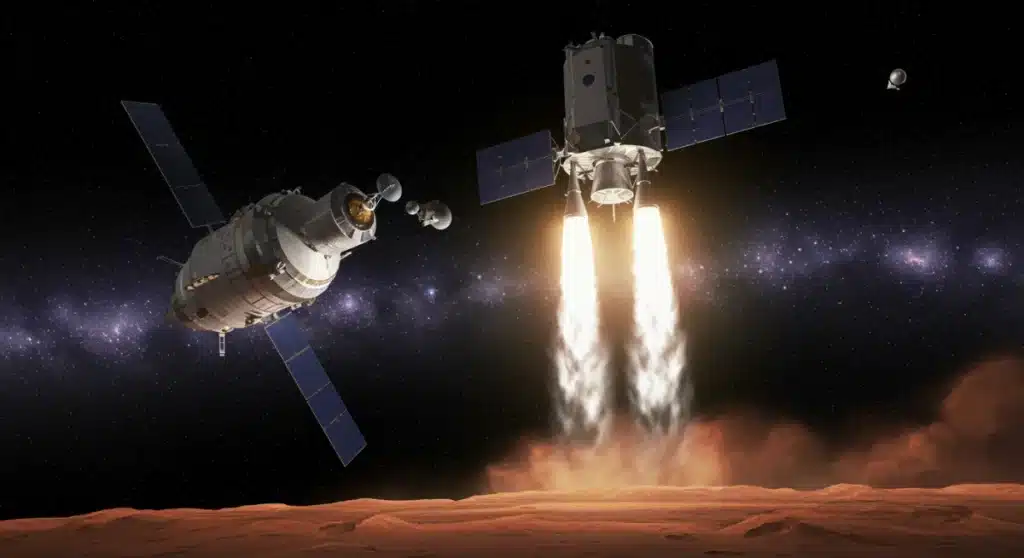
NASA has confirmed the 2026 launch date for its Mars Sample Return Mission, a complex multi-agency endeavor aiming to retrieve Martian rock and soil samples collected by the Perseverance rover for in-depth analysis on Earth.
The cosmos continues to beckon, and humanity’s quest for understanding our neighboring planets takes another monumental leap forward. In a highly anticipated announcement, NASA has officially confirmed the 2026 launch date for its ambitious Mars Sample Return Mission, setting the stage for one of the most complex and scientifically significant undertakings in space exploration history. This mission promises to revolutionize our understanding of Mars, offering an unprecedented opportunity to study pristine Martian material right here on Earth.
The Ambitious Goal: Bringing Mars to Earth
The Mars Sample Return Mission represents a colossal effort to retrieve rock and soil samples meticulously collected and cached by NASA’s Perseverance rover. These precious samples hold the potential to unlock secrets about Mars’ geological history, its climate evolution, and, most importantly, provide definitive answers about the possibility of ancient life on the Red Planet.
For decades, robotic missions have explored Mars, sending back invaluable data and imagery. However, bringing physical samples back to Earth allows for a level of scientific analysis simply impossible with instruments onboard a rover. Terrestrial laboratories possess a vast array of sophisticated tools, techniques, and expertise that can scrutinize these samples at an atomic level, far beyond what any spacecraft could carry.
Why is Sample Return So Crucial?
- Advanced Instrumentation: Earth-based labs offer instruments orders of magnitude more powerful than those that can be sent to Mars.
- Re-analysis Over Time: Samples can be re-analyzed as new technologies and scientific questions emerge, ensuring long-term research potential.
- Interdisciplinary Study: A diverse team of scientists from various disciplines can collaborate directly on the same samples.
- Protection of Pristine Samples: Carefully curated samples can be stored and protected from contamination, preserving their scientific integrity.
The ability to examine Martian samples directly will allow scientists to search for organic molecules, biosignatures, and other evidence of past life with unparalleled precision. It’s a game-changer that could fundamentally alter our perception of life beyond Earth.
A Multi-Agency, Multi-Phase Endeavor
The Mars Sample Return Mission is not a single launch but a highly intricate, multi-phase campaign involving international collaboration, primarily between NASA and the European Space Agency (ESA). This collaborative approach underscores the immense technical challenges and the global scientific interest in the mission’s success.
The first phase, the collection of samples, is already underway with the Perseverance rover. Operating within the Jezero Crater, a location believed to have once harbored a river delta and a lake, Perseverance has been drilling and sealing samples in sterile tubes since its landing in February 2021. These tubes are then deposited in strategic locations on the Martian surface, acting as future pick-up points.
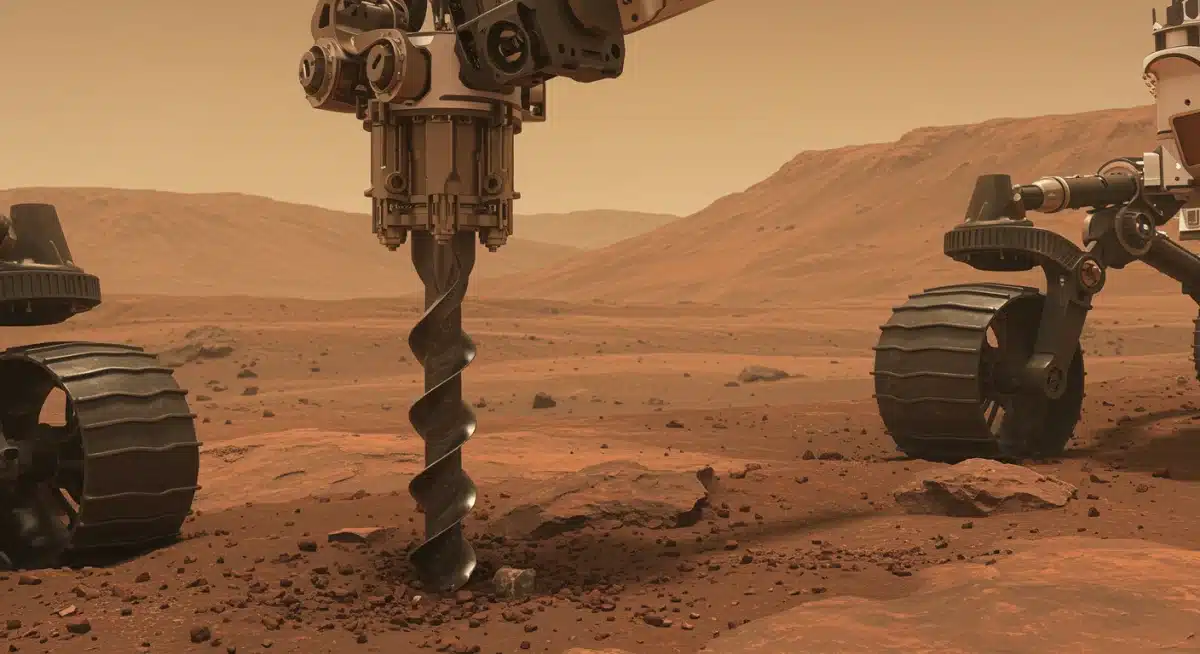

The next phases involve launching additional spacecraft to retrieve these samples. The confirmed 2026 launch date pertains to the Sample Retrieval Lander (SRL) mission, which will carry two crucial components: the Sample Fetch Rover (SFR) and the Mars Ascent Vehicle (MAV).
Key Components of the Mission
- Perseverance Rover: Currently collecting and caching samples on Mars.
- Sample Retrieval Lander (SRL): Scheduled for a 2026 launch, it will transport the Sample Fetch Rover and Mars Ascent Vehicle to the Martian surface.
- Sample Fetch Rover (SFR): A small rover designed to rapidly collect the cached sample tubes from the Martian surface and deliver them to the MAV.
- Mars Ascent Vehicle (MAV): The first rocket ever launched from another planet, it will carry the sample container into Martian orbit.
- Earth Return Orbiter (ERO): An ESA-led spacecraft that will capture the orbital sample container and transport it back to Earth.
This sequential approach minimizes risks and leverages the strengths of each mission element and international partner. The coordination required for such a complex ballet of spacecraft across millions of miles is truly a testament to modern engineering and scientific dedication.
The Journey Home: A Complex Orbital Rendezvous
Once the Sample Retrieval Lander touches down on Mars, the Sample Fetch Rover will embark on its mission to collect the cached sample tubes. This rover is designed to be faster and more agile than Perseverance, optimized solely for the task of retrieving the samples and delivering them to the Mars Ascent Vehicle.
The MAV, a groundbreaking two-stage rocket, will then perform a historic launch from the Martian surface, sending its precious cargo – a basketball-sized container filled with Martian samples – into orbit around Mars. This will be the first time humanity has launched a rocket from another planet, a significant engineering feat in itself.
In Martian orbit, the Earth Return Orbiter (ERO) will play its critical role. The ERO, built by ESA, will rendezvous with the orbiting sample container, capture it, and securely transfer it into a highly protected Earth Entry System (EES). This EES is designed to withstand the extreme temperatures of Earth’s atmosphere upon re-entry and ensure the samples remain uncontaminated and intact.
Challenges of the Return Journey
The return journey presents its own unique set of challenges:
- Orbital Rendezvous: Precisely matching the orbit of a small sample container in Martian orbit.
- Sample Containment: Ensuring absolute biological containment to prevent any potential contamination of Earth’s biosphere.
- Atmospheric Re-entry: Safely bringing the samples through Earth’s atmosphere without damage.
The mission’s success hinges on the flawless execution of each of these intricate steps, from sample collection on the surface to the final touchdown on Earth.
Scientific Implications: Unlocking Martian Secrets
The scientific community eagerly anticipates the arrival of these Martian samples. They are expected to provide unprecedented insights into fundamental questions about Mars and planetary science as a whole. Scientists will be able to analyze the samples for signs of ancient microbial life, study their mineralogy and geochemistry, and determine the planet’s atmospheric and hydrological history.
One of the primary goals is to search for biosignatures – evidence of past life. Unlike previous missions that could only infer conditions for life, direct sample analysis allows for a much more definitive search. Even if no direct evidence of life is found, understanding the geological and chemical processes that shaped Mars will inform our search for life elsewhere in the universe.
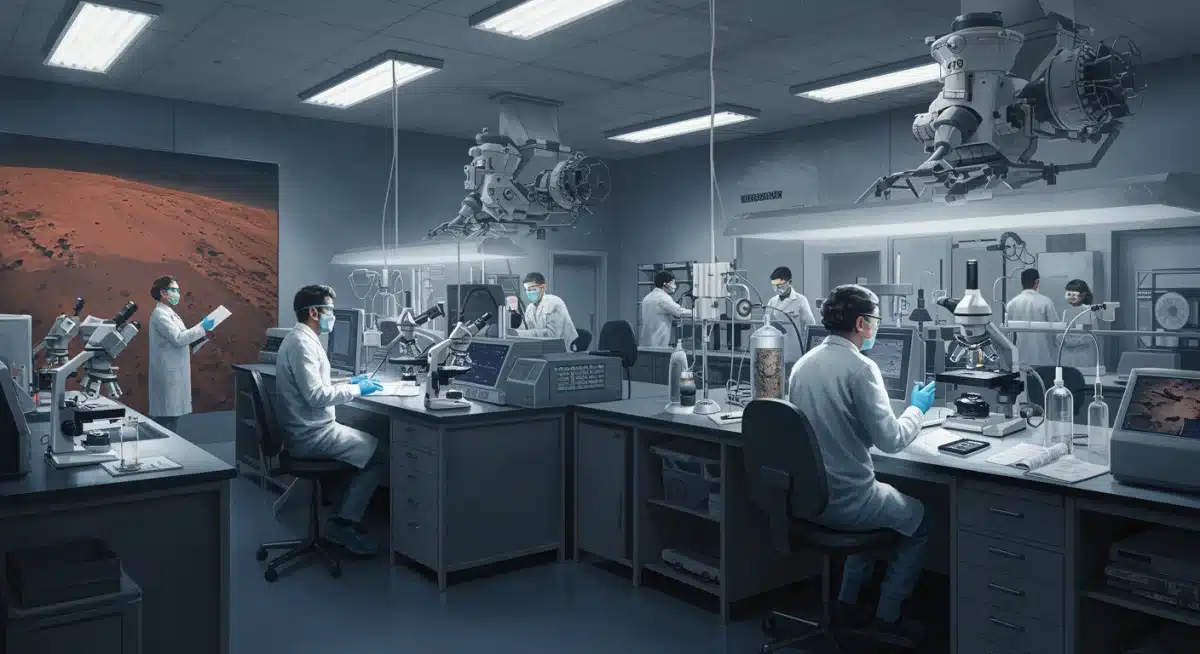

Furthermore, these samples will contribute to our understanding of planetary formation and evolution. By comparing Martian rocks to those found on Earth and the Moon, scientists can gain new perspectives on the processes that govern rocky planets and the conditions necessary for life to emerge. The data gleaned will be invaluable for future human missions to Mars, providing crucial information about potential resources and hazards.
What We Hope to Learn
- Evidence of past or present microbial life.
- Detailed geological history and formation of Jezero Crater.
- Composition of Martian soil and rocks at a microscopic level.
- Influence of water on Martian geological processes.
- Potential for future human exploration and resource utilization.
The samples will be stored in a dedicated, state-of-the-art containment facility on Earth, ensuring both their preservation and the safety of our planet.
Technological Innovations and Future Missions
The Mars Sample Return Mission pushes the boundaries of space technology in multiple ways. The development of the Mars Ascent Vehicle, capable of launching from another planet, is a monumental engineering achievement. The precision required for orbital rendezvous and sample transfer between spacecraft millions of miles from Earth is equally impressive.
These technological advancements will have far-reaching implications for future space exploration. The techniques developed for this mission could be adapted for sample return missions from other celestial bodies, such as asteroids, the Moon, or even other moons in our solar system. It sets a precedent for how complex, multi-stage robotic missions can be designed and executed.
Moreover, the mission provides invaluable experience for future human missions to Mars. Understanding the challenges of operating complex machinery remotely, managing sample collection and return, and ensuring planetary protection are all critical lessons that will directly inform crewed missions. The scientific data from the samples will also help identify optimal landing sites and potential resource locations for astronauts.
The Road Ahead: Milestones and Anticipation
With the 2026 launch date confirmed, the various agencies involved are now focusing on the detailed design, manufacturing, and testing of the remaining mission components. The Sample Retrieval Lander, Sample Fetch Rover, Mars Ascent Vehicle, and Earth Return Orbiter all represent incredible feats of engineering that must be perfected for the mission’s success.
The coming years will be filled with critical milestones, including spacecraft assembly, rigorous environmental testing, and launch preparations. Public engagement and scientific collaboration will also be key, as the world watches this ambitious endeavor unfold. The anticipation among scientists, engineers, and the general public is palpable, as the potential discoveries could redefine our place in the universe.
The successful execution of the Mars Sample Return Mission will not only deliver invaluable scientific data but also inspire a new generation of scientists and explorers, demonstrating humanity’s enduring capacity for innovation and discovery. It’s a journey that promises to bring a piece of Mars home, forever changing our perspective on the cosmos.
| Key Aspect | Brief Description |
|---|---|
| Launch Date | NASA confirmed the target launch for the Sample Retrieval Lander is 2026. |
| Mission Goal | Retrieve Martian rock and soil samples collected by Perseverance for Earth-based analysis. |
| Key Components | Perseverance, Sample Retrieval Lander, Sample Fetch Rover, Mars Ascent Vehicle, Earth Return Orbiter. |
| Scientific Impact | Unprecedented insights into Mars’ geology, climate, and potential for ancient life. |
Frequently Asked Questions About Mars Sample Return
The main goal is to bring scientifically selected Martian rock and soil samples, collected by the Perseverance rover, back to Earth. This allows for detailed analysis in terrestrial laboratories, which possess instruments far more powerful than those on any spacecraft, to search for signs of past life and understand Mars’ history.
NASA has confirmed that the Sample Retrieval Lander, a crucial part of the mission, is targeted for launch in 2026. This mission phase will deploy instruments to retrieve the cached samples and prepare them for their journey back to Earth.
The Mars Sample Return Mission is a joint effort primarily led by NASA, with significant contributions and collaboration from the European Space Agency (ESA). This international partnership highlights the global scientific importance and the complex engineering required for such an undertaking.
Jezero Crater was chosen because scientists believe it once contained a lake and a river delta billions of years ago. Such environments are prime locations for preserving biosignatures, or evidence of ancient microbial life, making the samples collected there incredibly valuable for scientific study.
The samples will be housed in a highly secure, multi-layered containment system, known as the Earth Entry System, designed to prevent any potential contamination of Earth’s biosphere. Upon return, they will be transferred to a dedicated, state-of-the-art bio-containment facility for analysis.
Conclusion
The confirmation of a 2026 launch date for the Mars Sample Return Mission marks a pivotal moment in humanity’s ongoing exploration of the solar system. This intricate, multi-phase endeavor, a testament to international collaboration and cutting-edge engineering, holds the promise of unlocking Mars’ deepest secrets. By bringing pristine Martian samples to Earth, scientists will gain an unparalleled opportunity to search for evidence of ancient life, unravel the planet’s geological and climatic history, and pave the way for future human missions. The insights gained will not only transform our understanding of the Red Planet but also broaden our perspective on the potential for life beyond Earth, inspiring generations to come.
