New Paid Family Leave Benefits 2026: Employers & Employees Guide

Paid family leave benefits are expanding significantly in 2026 across various US states, requiring employers to adapt to new regulations and employees to understand their enhanced rights for family and medical needs.
The landscape of employee benefits in the United States is undergoing a transformative shift, particularly concerning paid family leave 2026. As we approach the new year, several states are either implementing new paid family leave programs or significantly expanding existing ones, creating a complex but ultimately beneficial environment for both employers and their workforces. Understanding these evolving regulations is not just about compliance; it’s about fostering a supportive workplace culture and ensuring financial stability during critical life events.
the evolving landscape of paid family leave in 2026
As 2026 approaches, the patchwork of paid family leave policies across the United States continues to grow, reflecting a broader societal recognition of the importance of work-life balance and family support. This expansion isn’t just about adding new states to the list; it’s also about existing programs maturing and expanding their scope, offering more comprehensive benefits to a wider range of employees.
This dynamic environment means that employers, particularly those operating across state lines, must remain vigilant and proactive in understanding and implementing these changes. State-level initiatives are filling the void left by a lack of a federal mandate, leading to varied eligibility requirements, benefit durations, and funding mechanisms that demand careful navigation.
key states expanding or implementing programs
Several states are at the forefront of this expansion. For instance, states that previously offered limited leave are now extending the duration of benefits or broadening the definition of family members for whom leave can be taken. Other states are transitioning from voluntary programs to mandatory ones, ensuring broader coverage.
- California: Continues to be a leader, potentially increasing weekly benefit amounts and expanding the definition of family.
- New York: Expected to refine its program, possibly extending the maximum duration of paid leave.
- Colorado: Its paid family and medical leave insurance (FAMLI) program, which began benefit payments in 2024, will likely see further refinements and clarifications in its application and administration processes by 2026.
- Maryland: The state’s paid family and medical leave program is slated for full implementation, requiring employers to align their payroll and HR systems.
- Oregon: The Paid Family and Medical Leave Insurance (PFMLI) program will be fully operational, and employers need to ensure full compliance with contribution and benefit administration.
These developments signify a move towards more robust social safety nets, allowing individuals to care for new children, seriously ill family members, or manage their own serious health conditions without facing undue financial hardship. Employers who embrace these changes not only comply with the law but also enhance their appeal as employers of choice.
understanding employer obligations and compliance
For employers, the expansion of paid family leave programs in 2026 presents both challenges and opportunities. Compliance is paramount, as penalties for non-adherence can be significant. This involves more than just understanding the statutes; it requires a comprehensive review and potential overhaul of internal policies, payroll systems, and communication strategies.
The varying nature of state laws means that a one-size-fits-all approach is no longer viable. Employers with operations in multiple states must meticulously track and implement the specific requirements of each jurisdiction. This can involve different contribution rates, waiting periods, benefit calculations, and administrative procedures.
navigating diverse state requirements
Each state’s paid family leave program comes with its own set of rules. For example, some programs are entirely employer-funded, while others involve employee contributions through payroll deductions. The definition of a ‘family member’ can also vary significantly, impacting who an employee can take leave to care for. Furthermore, notice requirements for employees and employers differ, which can affect staffing and operational planning.
Employers should consider:
- Eligibility Criteria: Who is covered under the state law (e.g., full-time, part-time, temporary employees, self-employed individuals)?
- Benefit Amounts and Duration: How much of an employee’s wages are replaced, and for how many weeks can benefits be claimed?
- Funding Mechanisms: Is the program funded by employer contributions, employee contributions, or a combination?
- Integration with Other Leave Policies: How do these state programs interact with federal FMLA, short-term disability, or existing company-specific leave policies?
Proactive engagement with legal counsel and HR experts specializing in multi-state compliance is crucial. Developing a centralized system for tracking and managing leave requests across different states can help streamline processes and reduce the risk of errors.
employee rights and accessing benefits
For employees, the expanding paid family leave programs in 2026 represent a significant enhancement of their rights and a crucial safety net during critical life events. These benefits empower individuals to prioritize family and health without the immediate fear of financial instability. Understanding how to access these benefits is key to utilizing them effectively.
The primary purpose of these programs is to provide income replacement when an employee needs to take time off for specific family or medical reasons. This includes bonding with a new child (birth, adoption, or foster care placement), caring for a seriously ill family member, or managing their own serious health condition.
how to apply for paid family leave
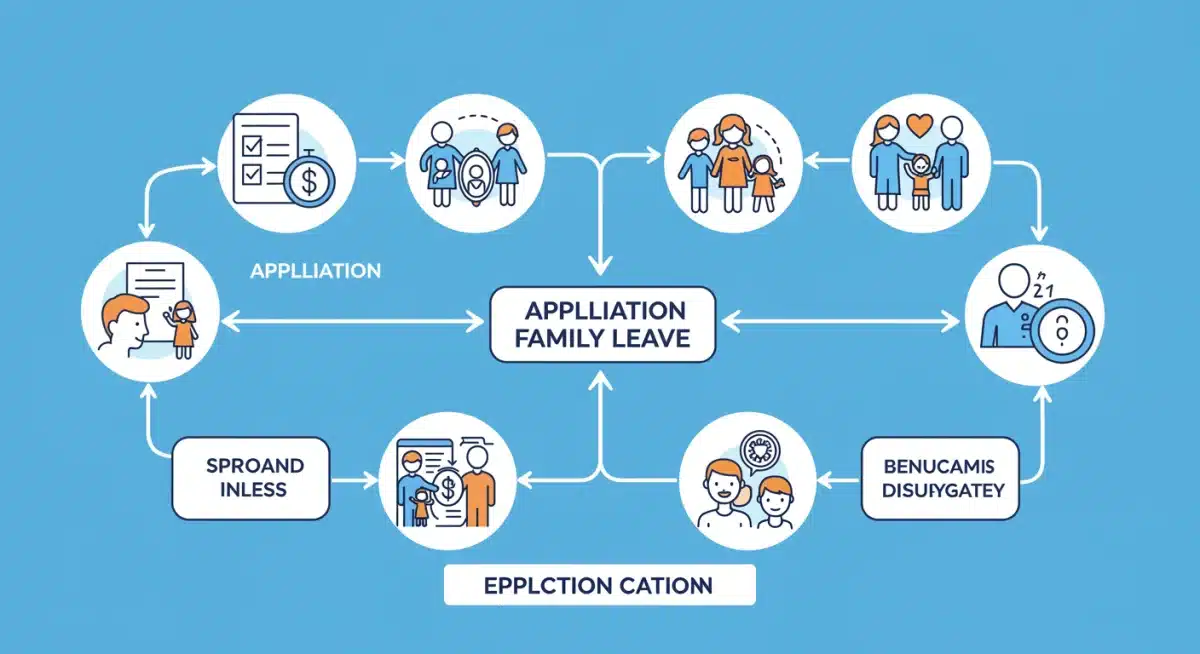
The application process typically involves several steps, though these can vary by state. Generally, employees will need to:
- Understand Eligibility: Confirm they meet the state’s residency, employment history, and contribution requirements.
- Provide Notice: Inform their employer of their intent to take leave, often with a specified advance notice period, unless it’s an emergency.
- Complete State Application: Submit an application to the relevant state agency, providing necessary documentation such as medical certifications or birth certificates.
- Receive Benefits: Once approved, benefits are typically paid directly to the employee by the state program, often on a weekly or bi-weekly basis.
It’s important for employees to familiarize themselves with their state’s specific guidelines, including any waiting periods before benefits begin and the maximum duration of leave. Many state websites offer detailed guides and online application portals to simplify the process. Employees should also communicate openly with their employers to ensure smooth coordination between state benefits and any company-provided leave or benefits.

financial implications for businesses
The implementation and expansion of paid family leave programs have direct financial implications for businesses. These implications can range from direct contributions to increased administrative costs and potential impacts on workforce planning. However, many businesses also find that these benefits lead to indirect financial advantages through improved employee retention and productivity.
The funding models vary significantly. Some states require employers to contribute a percentage of wages to a state-managed fund, while others allow employers to opt for private plans that meet state standards. Understanding these financial structures is critical for budgeting and financial forecasting.
budgeting for contributions and administrative costs
Employers need to accurately calculate their contributions to state programs or the costs of private plans. These contributions are often based on a percentage of employee wages, up to a certain cap. Beyond direct funding, businesses should account for:
- Administrative Overhead: Costs associated with managing leave requests, coordinating with state agencies, and updating payroll systems.
- Temporary Staffing: The expense of hiring temporary workers or reassigning duties to cover for employees on leave.
- Training: Investing in training for HR staff and managers to understand and implement the new policies correctly.
While these costs are tangible, they are often offset by the long-term benefits of a more stable and engaged workforce. Reduced turnover, higher morale, and a stronger employer brand can lead to significant savings and competitive advantages.
the positive impact on employee retention and morale
Beyond legal compliance and financial considerations, the expansion of paid family leave benefits in 2026 offers significant advantages in terms of employee retention and morale. In today’s competitive job market, comprehensive benefits packages are a powerful tool for attracting and keeping top talent. Paid family leave is increasingly becoming a non-negotiable expectation for many workers.
When employees feel supported during life’s most challenging and joyful moments, they are more likely to exhibit loyalty, dedication, and higher levels of engagement. This translates into a more stable workforce, reduced recruitment costs, and a more positive company culture.
creating a supportive work environment
Paid family leave programs help foster a culture of empathy and support, which can significantly boost morale. Employees who don’t have to choose between their family’s well-being and their financial stability are less stressed and more focused when they are at work. This leads to:
- Reduced Turnover: Employees are less likely to leave a company that offers robust support during critical life events.
- Increased Productivity: Employees returning from leave are often more refreshed and motivated, leading to higher productivity.
- Enhanced Employer Brand: Companies known for their generous leave policies attract higher-quality applicants and are seen as leaders in corporate social responsibility.
By actively promoting and facilitating the use of paid family leave, employers demonstrate a genuine commitment to their employees’ overall well-being, building a stronger and more resilient workforce. This investment in human capital ultimately benefits the entire organization.
challenges and future outlook
While the expansion of paid family leave benefits in 2026 is largely positive, it does come with its own set of challenges. Employers face the ongoing complexity of navigating a fragmented regulatory landscape, while employees need clear guidance to access their entitlements. The future outlook, however, points towards continued growth and standardization, albeit slowly.
One of the primary challenges for businesses, especially small and medium-sized enterprises (SMEs), is the administrative burden of understanding and implementing diverse state laws. This can strain resources, particularly for companies without dedicated HR or legal departments. Another challenge involves managing staffing during periods of extended leave, ensuring business continuity without overstretching remaining staff.
potential for federal action and standardization
Looking ahead, there is ongoing discussion about the possibility of a federal paid family leave program. While no immediate federal mandate is expected by 2026, the increasing number of state programs could eventually build momentum for a national standard. A federal program could:
- Simplify Compliance: Provide a uniform set of rules for all employers across the nation.
- Ensure Equity: Guarantee access to paid leave for all American workers, regardless of their state of residence.
- Reduce Administrative Burden: Streamline processes for multi-state employers.
Until then, states will continue to innovate and expand their programs, pushing the boundaries of what is considered standard for employee benefits. Employers and employees alike should stay informed about legislative developments at both state and federal levels to anticipate and adapt to further changes in the paid family leave landscape.
| Key Aspect | Brief Description |
|---|---|
| Expanding Programs | More states are implementing or enhancing paid family leave benefits, broadening eligibility and duration. |
| Employer Compliance | Businesses must navigate diverse state laws, update policies, and manage contributions for multi-state operations. |
| Employee Access | Employees gain enhanced rights and financial support for family care or personal health needs, with clear application processes. |
| Future Outlook | Continued state-level growth and ongoing discussions about potential federal standardization of paid family leave. |
frequently asked questions about paid family leave in 2026
Paid family leave provides income replacement for employees who need time off for specific family or medical reasons. In 2026, many US states are expanding these programs, meaning more employees will be eligible, benefits may increase, and the scope of covered family members or conditions will likely broaden.
States like California, New York, Colorado, Maryland, and Oregon are prominent in expanding or fully implementing their paid family and medical leave programs by 2026. These states are refining existing laws or bringing new comprehensive programs online, setting precedents for other regions.
Employers must understand and comply with each state’s specific laws, which includes updating internal policies, managing payroll contributions, and coordinating leave requests. Proactive communication with employees and seeking legal counsel for multi-state compliance are crucial for avoiding penalties and ensuring smooth operations.
Employees typically apply through their state’s designated agency after notifying their employer. The process involves confirming eligibility, submitting necessary documentation (like medical certificates), and providing details about the leave reason. State websites usually offer comprehensive guides and application portals for convenience.
For businesses, it means navigating compliance and financial adjustments, but also benefits like improved employee retention and morale. Employees gain crucial financial security during life events, leading to reduced stress and greater work-life balance, ultimately fostering a more engaged and stable workforce.
conclusion
The expansion of paid family leave benefits in 2026 marks a significant milestone in the evolution of employee support and workplace policy across the United States. While it introduces complexities for employers in terms of compliance and financial planning, the overarching benefits of a more secure, engaged, and loyal workforce are undeniable. For employees, these growing programs offer essential peace of mind, allowing them to attend to crucial family and health needs without undue financial burden. Both employers and employees must remain informed and proactive, adapting to the dynamic regulatory environment to fully leverage the advantages these programs offer, ultimately contributing to a more resilient and compassionate economy.
