Student Loan Forgiveness 2026: Programs & Eligibility

Understanding the landscape of student loan forgiveness in 2026 is crucial for borrowers, as programs and eligibility criteria continue to evolve, offering potential pathways to significant financial relief.
Navigating the complex world of federal student aid can be daunting, especially when seeking relief from educational debt. For many, the prospect of student loan forgiveness 2026 offers a beacon of hope. As policies shift and new initiatives emerge, keeping abreast of updated programs and eligibility criteria is paramount for anyone looking to alleviate their financial burden.
Understanding the Current Landscape of Student Loan Forgiveness
The journey through student loan debt can often feel like an uphill battle, especially with the ever-changing policies surrounding forgiveness. As we look towards 2026, it’s essential to grasp the foundational programs that continue to offer relief. The federal government has, over the years, implemented various mechanisms to help borrowers, ranging from programs tied to public service to those based on income.
These initiatives are not static; they are perpetually refined and sometimes overhauled to address economic shifts, societal needs, and political priorities. Therefore, what was applicable last year might have new nuances this year, and certainly by 2026, further adjustments are anticipated. Staying informed is not merely advisable but critical for those hoping to benefit.
Key Federal Forgiveness Programs Still Active
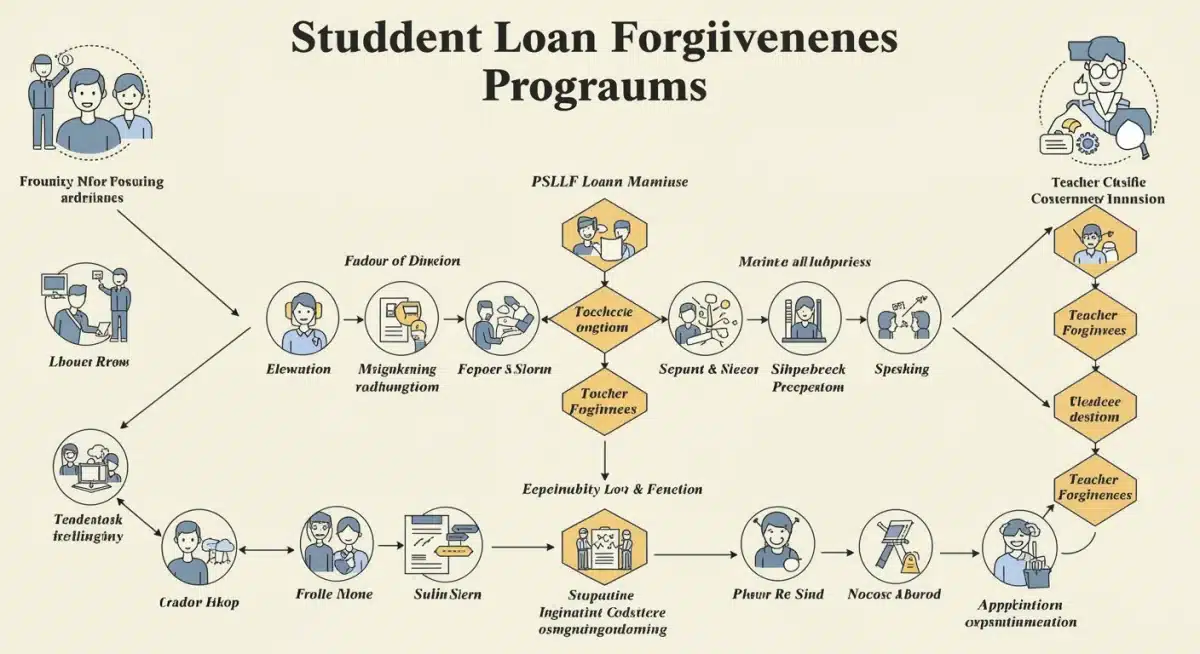
Several federal programs form the backbone of student loan forgiveness efforts. Each has distinct requirements and caters to different borrower profiles. Understanding these differences is the first step in determining your potential eligibility.
- Public Service Loan Forgiveness (PSLF): Designed for individuals working in public service, this program forgives the remaining balance on Direct Loans after 120 qualifying monthly payments under a qualifying repayment plan.
- Income-Driven Repayment (IDR) Plans: These plans cap monthly payments at an affordable amount based on income and family size. After 20 or 25 years of payments (depending on the plan), any remaining balance is forgiven.
- Teacher Loan Forgiveness: Specific to educators, this program offers up to $17,500 in forgiveness for eligible teachers who work for five complete and consecutive academic years in low-income schools or educational service agencies.
Beyond these, other specialized programs cater to specific professions, such as nurses or doctors, often tied to working in underserved communities. These programs often have strict criteria, including the type of loan, employment sector, and duration of service. The complexity necessitates careful review of all terms and conditions.
The overarching goal of these programs is to incentivize certain career paths or provide a safety net for borrowers facing financial hardship. However, the path to forgiveness is rarely straightforward, requiring diligent record-keeping, consistent payments, and regular communication with loan servicers. By 2026, we might see further consolidation or expansion of these programs as the government continues to refine its approach to student debt.
Anticipated Changes and Policy Updates for 2026
The political and economic climate significantly influences student loan policies. As we approach 2026, several factors could lead to substantial changes in existing forgiveness programs and potentially introduce new ones. These shifts can stem from legislative action, executive orders, or responses to broader economic trends.
Speculation about future policy often revolves around the desire to simplify the forgiveness process, expand eligibility, or address persistent issues of affordability. Borrowers should monitor official announcements from the Department of Education and reliable news sources to stay ahead of potential reforms.
Potential Legislative Reforms and Executive Actions
Legislative bodies are constantly debating proposals to tackle student debt. These discussions often include provisions for broader forgiveness initiatives, interest rate reforms, or changes to how loans are disbursed and repaid. Any major legislative overhaul could redefine the landscape of student loan forgiveness by 2026.
Similarly, presidential administrations have the power to enact changes through executive actions. While these might not be as sweeping as legislative reforms, they can still significantly impact specific programs or categories of borrowers. Recent history has shown that executive orders can provide immediate relief or adjustments to existing policies.
One area of continuous focus is the simplification of IDR plans. The current system, with multiple plans and varying terms, can be confusing for borrowers. Future changes might aim to streamline these options, making them more accessible and easier to navigate. This could involve reducing the number of plans or standardizing forgiveness timelines.
Another potential area of reform is related to the tax implications of forgiven debt. Currently, some forgiven loan amounts may be considered taxable income, which can create a new financial burden for recipients. Advocacy groups are pushing for changes to this policy, and by 2026, we might see some movement on this front, making forgiveness truly comprehensive.
Borrowers should also consider how economic conditions, such as inflation or recession, might influence policy decisions. In times of economic stress, there’s often increased pressure on policymakers to provide relief to consumers, including those with student loan debt. These external factors can accelerate or alter the trajectory of forgiveness initiatives.
Eligibility Criteria: Who Qualifies for Forgiveness in 2026?
Eligibility is the cornerstone of any loan forgiveness program. While the specific criteria can vary significantly between programs, there are common threads that borrowers should be aware of. As we approach 2026, understanding these requirements and how they might evolve is crucial for successful application.
Generally, federal student loans are the primary candidates for forgiveness programs. Private student loans, issued by banks or other private lenders, typically do not qualify for federal forgiveness initiatives. This distinction is vital and often misunderstood by borrowers.
Common Eligibility Requirements Across Programs
Despite their differences, most federal forgiveness programs share some fundamental eligibility requirements. These often relate to the type of loan, the borrower’s employment, and their repayment history.
- Loan Type: Direct Loans are almost always eligible. Federal Family Education Loan (FFEL) Program loans or Perkins Loans may require consolidation into a Direct Loan to qualify.
- Employment: Many programs, like PSLF and Teacher Loan Forgiveness, require specific types of employment (e.g., government, non-profit, or low-income school districts) for a defined period.
- Repayment History: Consistent, on-time payments, particularly under an eligible repayment plan, are often a prerequisite. For PSLF, 120 qualifying payments are needed.
Beyond these general requirements, specific programs introduce additional layers of criteria. For instance, IDR plans factor in income and family size, requiring annual certification. Failure to recertify can lead to higher payments or impact forgiveness timelines. The details matter, and even small errors can derail an application.
It’s also important to note that the definition of what constitutes a ‘qualifying payment’ or ‘qualifying employment’ can be complex. Borrowers should always consult with their loan servicer or the Department of Education for the most accurate and up-to-date definitions. Misinterpreting these terms can lead to significant delays or even disqualification.
As 2026 approaches, there’s a possibility that eligibility criteria could be expanded to include more types of loans or a wider range of professions. Conversely, stricter requirements could be implemented, especially if programs face budgetary constraints or high demand. Staying informed about these potential shifts is key to positioning yourself for success.
Navigating the Application Process for Forgiveness
Once you understand the eligibility criteria, the next critical step is navigating the application process. This can often be as complex as understanding the programs themselves, requiring careful attention to detail and consistent follow-up. The process typically involves submitting specific forms, providing documentation, and sometimes, ongoing certification.
Many borrowers find the application process overwhelming, leading to errors or delays. However, with proper preparation and a systematic approach, it is entirely manageable. The key is to gather all necessary information beforehand and meticulously follow the instructions provided by the Department of Education or your loan servicer.
Key Steps and Documentation Required
The application for student loan forgiveness is not a one-size-fits-all process; it varies depending on the specific program. However, several general steps and types of documentation are commonly required.
- Identify the Right Program: Ensure you are applying for the program that best fits your situation and eligibility.
- Gather Documentation: This typically includes proof of employment (for PSLF or Teacher Loan Forgiveness), income verification (for IDR plans), and records of your loan types and payment history.
- Complete Application Forms: Fill out all required forms accurately and completely. Incomplete applications are a common cause of delays.
- Submit and Follow Up: Submit your application through the designated channels and keep copies of everything. Regularly follow up with your loan servicer or the relevant government agency to track its status.
For programs like PSLF, continuous employment certification is often required. This means submitting an Employment Certification Form (ECF) annually or whenever you change employers. This proactive approach helps ensure that your payments are being counted correctly towards forgiveness.
Borrowers in IDR plans must also recertify their income and family size annually. Failing to do so can result in your monthly payments increasing or being removed from the IDR plan altogether, which could impact your progress towards forgiveness. Mark your calendar for these crucial deadlines.
It’s also advisable to consolidate federal loans if necessary. For example, older FFEL Program loans may need to be consolidated into a Direct Consolidation Loan to become eligible for PSLF. Understanding these preparatory steps is just as important as the application itself. By 2026, while the forms might be updated, the fundamental need for accuracy and diligence will remain constant.
The Role of Loan Servicers and Department of Education
Your loan servicer and the Department of Education are central figures in your student loan journey, especially when it comes to forgiveness. They are the primary points of contact for information, application processing, and managing your loan accounts. Understanding their roles and how to effectively interact with them is crucial.
Loan servicers are companies contracted by the Department of Education to handle the billing, customer service, and other administrative tasks for your federal student loans. The Department of Education, on the other hand, sets the policies and oversees the entire federal student aid system.
Effective Communication and Record Keeping
Maintaining clear and consistent communication with your loan servicer is paramount. This includes promptly responding to any requests for information, updating your contact details, and asking questions when you are unsure about any aspect of your loan or forgiveness program.
- Keep Records: Document every interaction, including dates, names of representatives, and summaries of conversations. Save copies of all submitted documents and any correspondence received.
- Understand Your Servicer: Know which company services your loans, as this can change. The Department of Education’s website is the best place to find this information.
- Utilize Online Portals: Most servicers offer online portals where you can manage your account, make payments, and access important documents.
The Department of Education’s Federal Student Aid (FSA) website is an invaluable resource. It provides comprehensive information on all federal student aid programs, including detailed guides on forgiveness options, eligibility, and the application process. It also hosts tools like the PSLF Help Tool, which can assist borrowers in tracking their progress.
If you encounter issues with your loan servicer, the FSA website also provides avenues for filing complaints. This can be an important step if you believe your servicer has made an error or is not providing adequate support. Escalating issues through official channels can sometimes be necessary to resolve complex problems.
For 2026 and beyond, the relationship between borrowers, servicers, and the Department of Education will remain critical. Policies and processes may evolve, but the need for diligent record-keeping and proactive communication will continue to be essential for anyone pursuing student loan forgiveness. Staying informed through official channels is always the safest bet.
Impact of Potential Forgiveness on Your Finances
Receiving student loan forgiveness can have a profound positive impact on your financial well-being, freeing up resources that were previously allocated to debt repayment. This newfound financial flexibility can open doors to achieving other personal and financial goals, such as saving for a down payment on a home, investing, or starting a family.
However, it’s also important to consider all aspects of forgiveness, including potential tax implications, which can vary depending on the type of forgiveness and current tax laws. A comprehensive understanding of these impacts will allow you to plan effectively for your financial future.
Beyond Debt Relief: Financial Planning Considerations
The immediate benefit of forgiveness is the elimination of a significant financial burden. This can improve your credit score, reduce your debt-to-income ratio, and provide a greater sense of financial security. However, the benefits extend beyond just the absence of debt.
- Increased Disposable Income: With loan payments removed, you have more money available for savings, investments, or discretionary spending.
- Improved Credit Score: A lower debt burden can positively impact your credit score, making it easier to qualify for other loans or financial products at better rates.
- Mental Well-being: The psychological relief from being debt-free can be substantial, reducing stress and improving overall quality of life.
While federal student loan forgiveness is generally not considered taxable income under current law until 2025, it’s crucial to be aware that this provision could change by 2026. Forgiveness under IDR plans, for instance, has historically been taxable. Therefore, planning for potential tax liabilities is a critical step for anyone expecting forgiveness.
Consulting with a financial advisor or tax professional is highly recommended to understand the specific tax implications of your forgiven debt. They can help you strategize to minimize any potential tax burden and integrate the forgiveness into your broader financial plan. This proactive approach ensures that the benefits of forgiveness are maximized.
Furthermore, consider how your budget will shift post-forgiveness. While tempting to increase spending, allocating a portion of your former loan payments to an emergency fund, retirement savings, or other financial goals can solidify your financial future. Forgiveness is not just an end to debt; it’s an opportunity for a fresh financial start, and careful planning will ensure you make the most of it in 2026 and beyond.
Preparing for Student Loan Forgiveness in 2026
Proactive preparation is key to successfully navigating the student loan forgiveness landscape as we head into 2026. With policies and programs subject to change, staying informed and organized will significantly increase your chances of qualifying for and receiving the relief you need. The time to start preparing is now, not when deadlines loom.
This preparation involves more than just understanding the rules; it requires active engagement with your loan accounts, careful documentation, and strategic financial planning. By taking these steps, you can position yourself favorably to benefit from any current or future forgiveness opportunities.
Actionable Steps for Borrowers
To maximize your chances of receiving student loan forgiveness by 2026, consider implementing the following actionable steps:
- Review Your Loan Details: Understand what types of federal loans you have, as this dictates eligibility for various programs.
- Track Your Payments: Keep meticulous records of all payments made, including dates, amounts, and the repayment plan you were on.
- Certify Employment Annually: If pursuing PSLF or Teacher Loan Forgiveness, ensure your employment is certified regularly.
- Stay Informed: Regularly check the Department of Education’s website and reliable news sources for policy updates and program changes.
- Consult Experts: If in doubt, speak with your loan servicer, a financial advisor, or a student loan counselor.
Consider creating a dedicated folder, either physical or digital, for all student loan-related documents. This should include your original loan agreements, payment histories, correspondence with your servicer, and any application forms you submit. Having everything in one place can save significant time and stress if you need to reference information or appeal a decision.
Another crucial step is to ensure your contact information with your loan servicer and the Department of Education is always up to date. Important notices, policy changes, or requests for information will be sent to the address and email on file. Missing these communications could lead to missed opportunities or complications.
Finally, develop a contingency plan. While striving for forgiveness, it’s wise to have a backup strategy in case you don’t qualify or if programs change unexpectedly. This might involve exploring alternative repayment options, budgeting to accelerate payments, or considering refinancing (though be cautious with refinancing federal loans into private ones, as you lose federal protections).
By diligently following these steps, you can empower yourself to effectively navigate the complexities of student loan forgiveness and be well-prepared for any developments that 2026 may bring.
| Key Point | Brief Description |
|---|---|
| Federal Loan Focus | Forgiveness primarily targets federal loans; private loans rarely qualify. |
| Program Variety | PSLF, IDR, and Teacher Loan Forgiveness are core options with distinct criteria. |
| Eligibility Evolution | Criteria and programs are subject to legislative and executive changes by 2026. |
| Proactive Preparation | Meticulous record-keeping, staying informed, and expert consultation are vital. |
Frequently Asked Questions About Student Loan Forgiveness 2026
Yes, federal student loan forgiveness programs like PSLF and Income-Driven Repayment (IDR) plans are expected to continue in 2026. However, specific eligibility criteria and program details may evolve due to legislative changes or executive actions. Borrowers should monitor official updates from the Department of Education.
Generally, only federal student loans, particularly Direct Loans, qualify for forgiveness programs. Older federal loans, such as FFEL Program loans or Perkins Loans, may need to be consolidated into a Direct Loan to become eligible. Private student loans typically do not qualify for federal forgiveness initiatives.
To check your eligibility, review the specific requirements for each program on the Federal Student Aid (FSA) website. You should also contact your loan servicer to confirm your loan types, repayment history, and employment status. Utilizing tools like the PSLF Help Tool can assist in tracking progress.
Under current law, certain types of federal student loan forgiveness are not considered taxable income until 2025. However, this provision could change by 2026, and forgiveness under some IDR plans has historically been taxable. It is advisable to consult a tax professional for personalized advice on potential tax liabilities.
Start by understanding your loan types and repayment history. Keep meticulous records of all payments and communications. If applicable, certify your employment annually for PSLF. Stay informed about policy changes through official Department of Education sources and consider consulting a financial advisor for strategic planning.
Conclusion
The journey toward student loan forgiveness in 2026 remains a dynamic and potentially life-changing endeavor for millions of Americans. While the landscape is subject to ongoing legislative and economic shifts, the core federal programs like PSLF and IDR plans continue to offer viable pathways to relief. Success hinges on a proactive approach: understanding your specific loan types, meticulously tracking your payments and employment, and staying rigorously informed about any policy updates. Engaging effectively with your loan servicer and utilizing resources from the Department of Education are indispensable steps. Ultimately, navigating this complex terrain with diligence and informed decision-making will empower borrowers to seize potential opportunities for significant financial freedom.
