Supreme Court’s Landmark Judicial Review Cases: Spring 2026
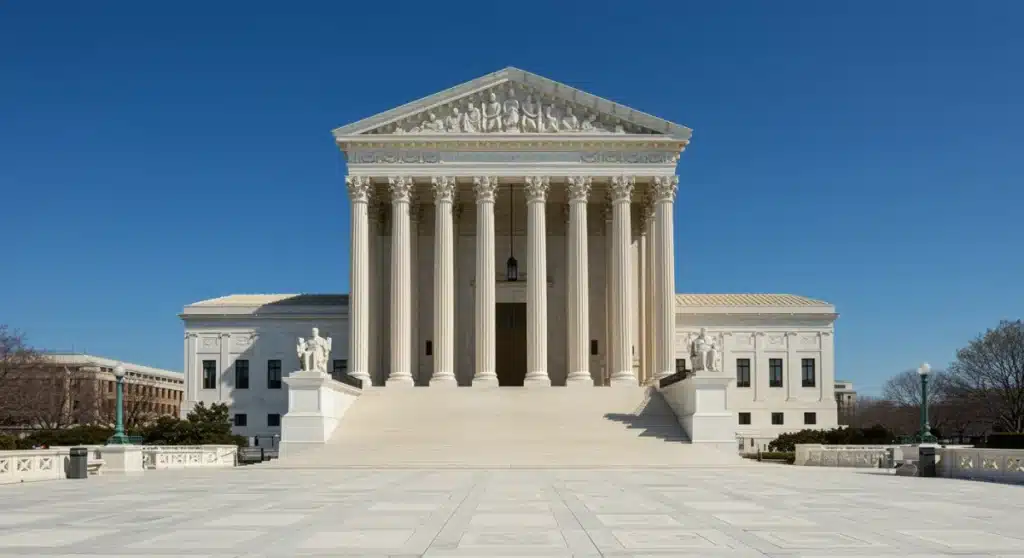
The Supreme Court is poised to tackle five critical judicial review cases during its Spring 2026 session, decisions that will undoubtedly redefine legal precedents and influence the nation’s future.
The United States Supreme Court’s upcoming Spring 2026 session promises to be a pivotal moment for American jurisprudence, as it prepares to hear five landmark cases that collectively represent a significant exercise of its power of judicial review. These cases are not merely legal curiosities; they touch upon fundamental aspects of constitutional law, individual liberties, and the balance of power within the federal system, making their outcomes of immense importance to every citizen.
Understanding Judicial Review’s Enduring Significance
Judicial review stands as a cornerstone of the American legal system, empowering courts to assess the constitutionality of legislative acts and executive actions. This power, though not explicitly defined in the Constitution, was firmly established by the Supreme Court in the landmark 1803 case of Marbury v. Madison. Its enduring significance lies in its role as a vital check on governmental overreach, ensuring that laws passed by Congress and actions taken by the executive branch adhere to the principles enshrined in the Constitution.
The exercise of judicial review ensures a delicate balance, preventing any single branch from accumulating excessive power. It allows the judiciary to act as an impartial arbiter, safeguarding the fundamental rights of individuals and upholding the supreme law of the land. Without this mechanism, the Constitution’s provisions could be undermined, leading to potential abuses of power and a less stable democratic framework.
Historical Context and Evolution
From its inception, judicial review has been a dynamic concept, evolving with the nation’s needs and challenges. Early interpretations focused on maintaining the federal-state balance, while later eras saw the Court grappling with issues of economic regulation, civil rights, and individual liberties. Each generation has witnessed the Supreme Court apply this power to address contemporary societal concerns, shaping the legal landscape in profound ways.
- Marbury v. Madison (1803): Established the principle of judicial review.
- McCulloch v. Maryland (1819): Affirmed federal supremacy over state laws.
- Dred Scott v. Sandford (1857): A controversial use of judicial review that intensified sectional tensions.
The continuous application of judicial review highlights its critical function in a living Constitution. As society progresses and new legal questions arise, the Supreme Court’s role in interpreting the Constitution through this power becomes ever more crucial. The cases slated for the Spring 2026 session are expected to continue this tradition, adding new chapters to the storied history of American constitutional law.
Case 1: The Future of Digital Privacy Rights
The first landmark case on the Supreme Court’s Spring 2026 docket delves into the complex and rapidly evolving realm of digital privacy. As technology continues its relentless advance, the boundaries of personal privacy in the digital age are constantly being tested. This case specifically addresses the extent to which government agencies can access personal data stored on cloud servers without a warrant, a question with profound implications for millions of Americans.
The core of the dispute revolves around the Fourth Amendment’s protection against unreasonable searches and seizures. While traditional interpretations have focused on physical spaces and tangible items, the digital world presents unique challenges. The Court will need to consider whether data stored remotely, often across international borders, falls under the same protections as information held on a personal device or in a physical home.
Arguments for and Against Enhanced Protection
Advocates for stronger digital privacy argue that individuals have a reasonable expectation of privacy for their online communications and data. They contend that the ‘third-party doctrine,’ which suggests information voluntarily shared with third parties (like cloud providers) loses its Fourth Amendment protection, is outdated in an era where digital services are almost indispensable. Weakening these protections, they argue, could pave the way for mass surveillance.
- Pro-Privacy Stance: Emphasizes the need for warrants for digital data access.
- Government’s Argument: Focuses on national security and law enforcement efficacy.
- Technological Neutrality: Calls for legal frameworks to apply consistently across old and new technologies.
Conversely, government agencies and some legal scholars argue that law enforcement needs broad access to digital information to combat crime, terrorism, and other threats. They highlight the speed at which digital evidence can be deleted or encrypted, making traditional warrant procedures sometimes impractical. The Court’s decision will undoubtedly set a precedent for how digital information is treated under constitutional law for decades to come, balancing individual rights against collective security.
Case 2: Re-evaluating Executive Authority in Climate Regulation
The second significant case involves a direct challenge to the scope of executive authority, specifically concerning the administration’s power to enact sweeping climate regulations without explicit congressional approval. This case emerges from a series of executive orders and agency rules aimed at reducing carbon emissions and promoting renewable energy, actions that have drawn both fervent support and strong opposition.
At its heart, this case questions the separation of powers doctrine and the ‘major questions doctrine,’ which posits that agencies must have clear congressional authorization for regulations that have vast economic and political significance. Opponents argue that the executive branch has overstepped its constitutional bounds, effectively legislating on a matter of national importance without the direct mandate of the people’s representatives.
The Balance Between Branches
Proponents of the administration’s climate actions assert that environmental protection is an urgent matter that necessitates swift and decisive action, often beyond the slow pace of legislative processes. They point to existing statutory language that grants regulatory agencies broad authority to protect public health and welfare, arguing that climate change falls squarely within this mandate. The outcome could significantly impact future environmental policy.
- Executive Branch Power: Debates the limits of presidential and agency authority.
- Congressional Role: Highlights the legislative branch’s primary role in lawmaking.
- Climate Policy Implications: Potential to reshape environmental regulations.
The Court’s ruling will provide critical guidance on the balance of power between the executive and legislative branches, particularly in areas of complex and politically charged policy. A decision favoring congressional authority could force future administrations to seek more explicit legislative backing for major policy initiatives, while a ruling upholding broad executive power might empower faster governmental responses to pressing issues like climate change. This judicial review will clarify the boundaries of executive action.
Case 3: Affirmative Action and Merit-Based Systems
The third landmark case reopens the contentious debate surrounding affirmative action, specifically in the context of university admissions and potentially broader employment practices. This challenge argues that current affirmative action policies, designed to promote diversity, inadvertently lead to reverse discrimination by giving preferential treatment based on race or ethnicity, thereby violating the Equal Protection Clause of the Fourteenth Amendment.
The petitioners contend that admissions processes should be strictly merit-based, focusing solely on academic achievement, test scores, and other individual qualifications, without considering demographic factors. They argue that any policy that uses race as a factor in decision-making is inherently discriminatory and undermines the principle of equal opportunity for all. This case could significantly alter how institutions approach diversity.
Diversity vs. Equal Protection
Defenders of affirmative action maintain that diversity in higher education and the workplace offers substantial benefits, fostering a richer learning environment, promoting different perspectives, and preparing students for a diverse global society. They argue that historical and systemic inequalities necessitate proactive measures to ensure equitable representation and that race-neutral alternatives are insufficient to achieve meaningful diversity.
- Constitutional Challenge: Focuses on the Equal Protection Clause.
- Merit vs. Diversity: Examines the balance between these two principles.
- Societal Impact: Could reshape educational and employment landscapes.
The Supreme Court’s decision in this case will have far-reaching consequences for colleges, universities, and potentially private employers across the nation. It will revisit previous rulings on affirmative action, possibly setting new legal standards for how institutions can pursue diversity while adhering to constitutional mandates of equal protection. The outcome will influence access to opportunities for generations.
Case 4: Redefining Religious Freedom in Public Life
The fourth case on the Spring 2026 docket takes on the intricate and often sensitive issue of religious freedom, specifically examining the extent to which religious beliefs can influence public policy and actions by government employees. This particular case involves a public official who refused to perform certain duties based on deeply held religious objections, leading to questions about the scope of religious accommodation versus the principle of governmental neutrality.
The central legal tension here lies between the First Amendment’s Free Exercise Clause, which protects an individual’s right to practice their religion, and the Establishment Clause, which prohibits the government from establishing or endorsing a religion. The Court will need to determine how these two clauses interact when a public servant’s religious beliefs conflict with their official responsibilities, particularly when those responsibilities involve services for all citizens.
Balancing Rights and Responsibilities
Those supporting the public official’s right to religious accommodation argue that individuals should not be forced to violate their conscience as a condition of public service. They emphasize the importance of protecting religious expression, even within the context of government employment. This perspective often highlights the need for reasonable accommodations that allow individuals to maintain their faith while performing their duties.
- First Amendment Rights: Free Exercise vs. Establishment Clauses.
- Public Service: Role of religious beliefs in official duties.
- Precedent Setting: Will clarify boundaries for religious freedom claims.
Conversely, opponents argue that public officials, when acting in their official capacity, must serve all members of the public equally, without imposing their religious beliefs on others. They contend that allowing exemptions based on religious objections could undermine governmental neutrality and potentially lead to discriminatory practices against certain groups. The Court’s ruling will provide crucial clarification on the boundaries of religious freedom in the public square, impacting both public employees and the citizens they serve.
Case 5: The Evolving Landscape of Voting Rights and Election Integrity
The fifth and final landmark case scheduled for the Spring 2026 session addresses critical questions surrounding voting rights and election integrity, specifically focusing on a state’s newly enacted voter identification laws and restrictions on ballot drop-off locations. This case has ignited a fierce debate about accessibility to the ballot box versus concerns over electoral fraud, placing the Supreme Court at the center of one of the nation’s most fundamental democratic processes.
Petitioners argue that the new state laws disproportionately burden minority voters, the elderly, and low-income individuals who may have limited access to required identification or transportation to distant polling places. They contend that these restrictions suppress voter turnout and violate the Voting Rights Act and the Fourteenth and Fifteenth Amendments, which protect the right to vote free from discrimination.
Securing the Vote: Access vs. Integrity
Conversely, the state argues that its voter identification laws and restrictions on drop-off locations are necessary measures to prevent voter fraud and enhance public confidence in election results. They assert that these laws are designed to ensure the integrity of the electoral process and that any burdens imposed are minimal and outweighed by the state’s legitimate interest in secure elections. This case will explore the delicate balance.
- Voting Rights Act: Interpretation of its protections.
- Voter ID Laws: Constitutionality and impact on access.
- Election Integrity: State powers versus federal protections.
The Supreme Court’s decision will have profound implications for future elections across the United States. It will likely redefine the balance between states’ rights to regulate elections and federal protections for voting access. The outcome could either pave the way for more stringent voting requirements or reinforce safeguards against voter suppression, significantly shaping the future of American democracy and the exercise of judicial review in this vital area.
The Broader Impact of Supreme Court Decisions
The five cases slated for the Spring 2026 session extend far beyond their immediate legal questions; their resolutions will ripple through American society, influencing everything from individual liberties to the operational framework of government. Each decision by the Supreme Court, particularly in landmark cases, serves as a powerful precedent, guiding lower courts and shaping public policy for years, if not decades, to come. This makes the Court’s exercise of judicial review a continuous force in national development.
These rulings can either affirm existing social norms, challenge them, or establish entirely new interpretations of constitutional principles. For example, decisions on digital privacy could necessitate a complete overhaul of how law enforcement operates in the digital realm, while rulings on climate regulation might dictate the future of environmental policy and energy production. The Court’s pronouncements often become flashpoints for political and social debate.
Shaping Public Discourse and Policy
Beyond the legal specifics, Supreme Court decisions frequently ignite public discourse, prompting widespread discussions about justice, equality, and the role of government. They can mobilize advocacy groups, influence legislative agendas, and even impact electoral outcomes. The Court’s interpretations of fundamental rights and governmental powers are not abstract legal concepts; they are tangible forces that affect daily life.
- Legal Precedent: Establishes guidelines for all future legal cases.
- Policy Implications: Directly influences governmental regulations and programs.
- Societal Change: Can drive significant shifts in cultural norms and public opinion.
The weight of these upcoming decisions underscores the critical importance of the Supreme Court’s role in a democratic society. As the ultimate arbiter of constitutional questions, its judgments reflect and shape the nation’s values and trajectory. Monitoring these cases provides invaluable insight into the evolving legal and social landscape of the United States, showcasing the profound impact of judicial review on the fabric of the nation.
| Case Topic | Brief Description |
|---|---|
| Digital Privacy Rights | Examining government access to cloud data without warrants, impacting Fourth Amendment. |
| Executive Climate Authority | Challenging the administration’s power to enact climate regulations without congressional approval. |
| Affirmative Action | Re-evaluating the constitutionality of race-conscious policies in university admissions. |
| Voting Rights | Assessing state voter ID laws and ballot access restrictions, impacting election integrity. |
Frequently Asked Questions About Judicial Review
Judicial review is the power of the Supreme Court to declare legislative and executive actions unconstitutional. This fundamental principle ensures that all laws and governmental actions comply with the provisions of the U.S. Constitution, acting as a crucial check on governmental power and upholding the rule of law.
The power of judicial review was formally established in 1803 by the Supreme Court in the landmark case of Marbury v. Madison. Although not explicitly mentioned in the Constitution, Chief Justice John Marshall’s opinion asserted the Court’s authority to interpret the Constitution and invalidate unconstitutional laws.
These five cases are deemed ‘landmark’ because they address fundamental constitutional questions with far-reaching implications for American society, individual rights, and the balance of governmental powers. Their outcomes are expected to set significant legal precedents that will influence future laws and policies for decades.
Supreme Court decisions profoundly impact daily life by shaping laws related to privacy, environmental protection, education, voting, and more. For instance, rulings on digital privacy could affect how your personal data is protected, while decisions on voting rights influence electoral processes and access to the ballot box.
The Spring 2026 session is significant because it features a concentrated number of cases that directly challenge or seek to redefine major areas of law through judicial review. The Court’s interpretations in these cases will further solidify or shift the legal landscape on critical issues, demonstrating the ongoing power of the judiciary.
Conclusion
The Supreme Court’s Spring 2026 session is poised to be a defining period for American constitutional law, with five landmark cases demonstrating the enduring and profound power of judicial review. From the intricate challenges of digital privacy and the boundaries of executive authority in climate regulation to the deeply contested issues of affirmative action, religious freedom, and voting rights, each case carries immense weight. The Court’s deliberations and eventual rulings will not only establish critical legal precedents but also significantly influence the social, political, and economic fabric of the United States for years to come. Understanding these cases is essential for any citizen seeking to comprehend the evolving landscape of American justice and governance.
