Boosting STEM Enrollment: 3 Proven Strategies for U.S. High Schools
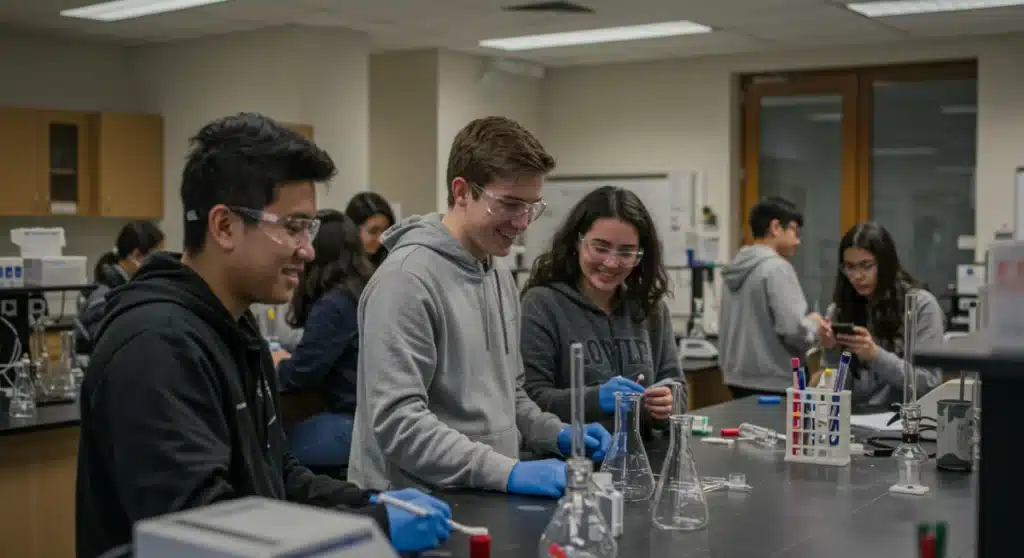
U.S. high schools can significantly boost STEM enrollment by 2026 through three proven strategies: early exposure and mentorship, integrating real-world applications, and fostering inclusive learning environments.
The future of innovation and economic growth in the United States hinges significantly on a robust workforce skilled in science, technology, engineering, and mathematics (STEM). Recognizing this imperative, the need for
boosting STEM enrollment in U.S. high schools by 2026 has become a critical objective. This article delves into three proven strategies that can empower educational institutions to cultivate a greater interest and participation in these vital fields among their students, ensuring a pipeline of talent ready to tackle tomorrow’s challenges.
The Current Landscape of STEM Education in U.S. High Schools
Understanding the challenges and opportunities within current STEM education is the first step toward effective change. While there has been an increased focus on STEM initiatives over the past decade, enrollment numbers, particularly among underrepresented groups, still lag behind national needs. Many students perceive STEM subjects as overly difficult or irrelevant to their future aspirations, leading to disengagement early on.
Moreover, the rapid evolution of technology means that educational content must constantly adapt to remain current and engaging. Traditional teaching methods often fall short in capturing the dynamic nature of STEM fields, which thrive on inquiry, experimentation, and problem-solving. Addressing these foundational issues is paramount for any strategy aimed at significantly increasing student participation.
Perceptions and Barriers to Entry
- Perceived Difficulty: Many students view STEM subjects as inherently challenging, leading to apprehension and avoidance.
- Lack of Relevance: Students often struggle to connect theoretical STEM concepts to real-world applications and career paths.
- Stereotypes: Persistent stereotypes about who is ‘good at’ STEM can deter diverse groups from pursuing these fields.
- Inadequate Resources: Some schools lack the necessary funding, equipment, or trained teachers to offer robust STEM programs.
Overcoming these barriers requires a multifaceted approach that not only enhances the curriculum but also transforms the overall learning environment. It means shifting from rote memorization to hands-on exploration, and from isolated subjects to integrated, interdisciplinary learning experiences. The goal is to make STEM accessible, exciting, and clearly linked to meaningful future opportunities for every student.
Ultimately, the current landscape reveals a mix of dedicated educators striving for improvement and systemic hurdles that require innovative solutions. By understanding where we stand, we can better chart a course toward a future where STEM enrollment reflects the true potential and diversity of our student population. This foundational understanding sets the stage for exploring specific, actionable strategies.
Strategy 1: Early Exposure and Mentorship Programs
One of the most impactful ways to boost STEM enrollment is by introducing students to STEM concepts and careers at an earlier age, coupled with robust mentorship opportunities. Early exposure demystifies these fields and builds foundational interest, while mentorship provides guidance and inspiration from experienced professionals.
Starting in middle school, or even elementary school, with age-appropriate STEM activities can spark curiosity before students form preconceived notions about difficulty or relevance. These early experiences should be hands-on, exploratory, and fun, focusing on discovery rather than rigid academic outcomes. This initial engagement can lay a strong groundwork for future interest.
Implementing Effective Early Exposure Initiatives
- Interactive Workshops: Organize workshops on robotics, coding, or environmental science that are engaging and project-based.
- STEM Summer Camps: Offer immersive summer programs that allow students to explore different STEM disciplines in a relaxed, experiential setting.
- School STEM Clubs: Establish clubs focused on specific STEM areas, such as coding clubs, engineering design challenges, or science Olympiads.
Beyond sparking initial interest, sustained engagement is crucial. This is where mentorship programs become invaluable. Connecting high school students with professionals in STEM fields, university students, or even older high school peers already pursuing advanced STEM courses can provide invaluable insights and encouragement. Mentors can share their experiences, offer advice, and help students navigate academic and career pathways.
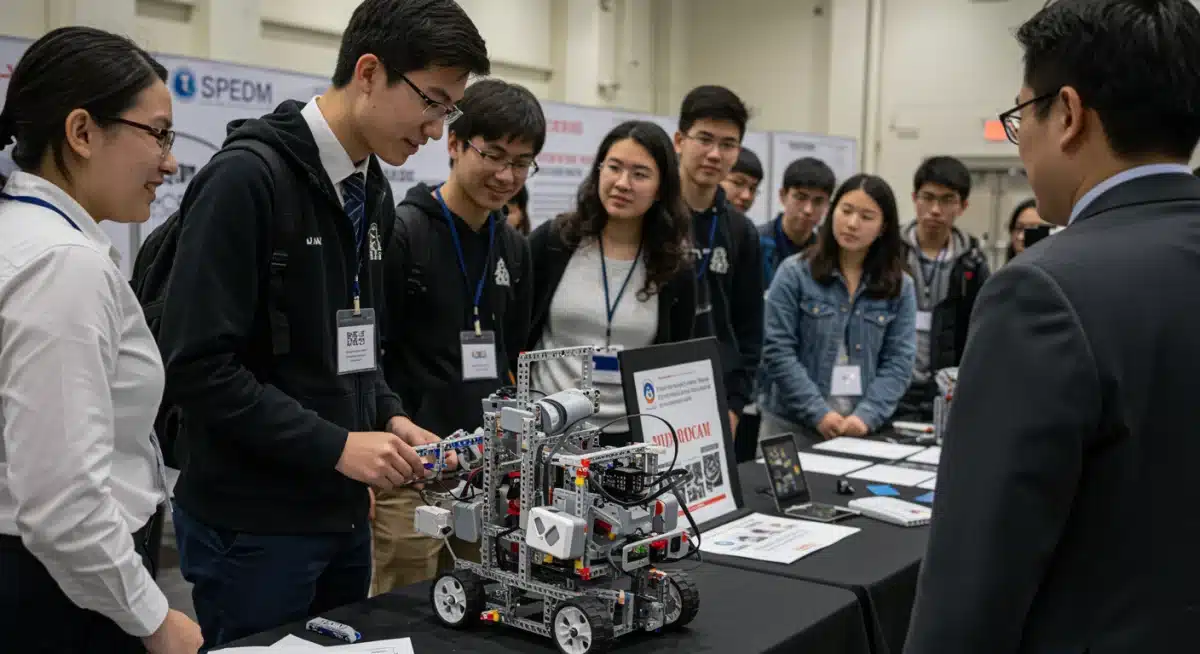
Effective mentorship goes beyond one-off interactions. It involves consistent, supportive relationships that build confidence and provide a sense of belonging within the STEM community. Mentors can guide students through challenging projects, discuss potential career paths, and help them overcome obstacles, making the journey into STEM feel less daunting and more achievable.
By combining early, engaging exposure with meaningful mentorship, schools can create a powerful ecosystem that nurtures nascent interest into sustained passion for STEM. This dual approach ensures that students not only discover STEM but also feel supported and empowered to pursue it further, significantly contributing to boosting STEM enrollment in the long run.
Strategy 2: Integrating Real-World Applications and Project-Based Learning
One of the most common student complaints about STEM subjects is their perceived abstractness. To combat this, U.S. high schools must prioritize integrating real-world applications and project-based learning into their curricula. This approach makes STEM concepts tangible, relevant, and exciting, showing students how theoretical knowledge translates into practical solutions.
Instead of simply learning equations or scientific principles in isolation, students should be challenged to apply them to solve authentic problems. This could involve designing a sustainable energy solution for the school, developing an app to address a community need, or analyzing data to understand local environmental issues. Such projects foster critical thinking, collaboration, and innovation.
Key Elements of Project-Based Learning in STEM
- Authentic Problems: Projects should address real-world issues that resonate with students’ experiences and interests.
- Interdisciplinary Connections: Encourage projects that blend multiple STEM disciplines, mimicking real-world challenges.
- Collaboration and Communication: Structure projects to require teamwork and the presentation of findings, developing essential soft skills.
- Iterative Design: Emphasize the process of design, testing, and refinement, mirroring engineering and scientific methodologies.
Project-based learning not only deepens understanding but also increases student engagement. When students are actively involved in creating something, they take ownership of their learning and are more motivated to overcome challenges. This active participation transforms them from passive recipients of information into active creators of knowledge and solutions.
Furthermore, connecting classroom learning to current events, industry trends, and local community needs helps students see the direct impact of STEM. Inviting guest speakers from various STEM fields to share their work, arranging field trips to local companies or research institutions, and participating in science and engineering fairs are all ways to bridge the gap between academia and application.
By consistently demonstrating the practical relevance of STEM through engaging, hands-on projects, high schools can significantly enhance student interest and, consequently, boost STEM enrollment. This strategy moves beyond theoretical instruction to cultivate problem-solvers and innovators ready for future challenges.
Strategy 3: Fostering Inclusive and Supportive STEM Learning Environments
For STEM enrollment to truly flourish, especially among underrepresented groups, U.S. high schools must actively cultivate inclusive and supportive learning environments. This means going beyond simply offering STEM courses and deliberately creating spaces where all students feel welcome, capable, and encouraged to participate.
An inclusive environment addresses biases, stereotypes, and systemic barriers that often deter girls, racial and ethnic minorities, and students from low-income backgrounds from pursuing STEM. It involves intentional efforts to diversify teaching staff, showcase diverse role models, and ensure that curriculum materials reflect a wide range of perspectives and contributions to STEM.
Pillars of an Inclusive STEM Environment
- Diverse Representation: Highlight contributions from women and minorities in STEM history and contemporary fields.
- Bias Training for Educators: Equip teachers with the tools to recognize and counteract unconscious biases in the classroom.
- Equitable Access: Ensure all students, regardless of socioeconomic status, have access to high-quality STEM resources and opportunities.
- Culturally Responsive Pedagogy: Integrate students’ cultural backgrounds and experiences into STEM lessons to make learning more relevant.
Creating a supportive environment also means fostering a growth mindset, where mistakes are seen as learning opportunities rather than failures. Teachers can play a pivotal role by emphasizing effort and perseverance over innate talent, helping students build resilience in the face of challenging STEM concepts. Collaborative learning models, where students work together to solve problems, can further reduce anxiety and promote a sense of community.

Furthermore, providing targeted support programs, such as tutoring, study groups, or summer bridge programs, can help students who might feel overwhelmed or underprepared. These programs offer a safety net and additional resources, ensuring that no student is left behind due due to gaps in their foundational knowledge or confidence.
Ultimately, an inclusive and supportive STEM learning environment is one where every student feels valued, respected, and empowered to explore their potential in these critical fields. By prioritizing equity and belonging, schools can unlock a broader pool of talent and significantly contribute to boosting STEM enrollment, creating a more diverse and innovative future workforce.
Overcoming Common Implementation Challenges
Implementing significant changes in educational strategies often comes with its own set of challenges. When aiming for boosting STEM enrollment, schools might encounter hurdles such as limited funding, resistance to new pedagogical approaches, and a lack of qualified STEM educators. Addressing these proactively is crucial for the success of any initiative.
Funding can be a major constraint, especially for purchasing new equipment, developing innovative curricula, or providing professional development for teachers. Schools can explore grant opportunities from government agencies, non-profit organizations, and corporate partners. Forming alliances with local businesses and universities can also provide access to resources, expertise, and even volunteer mentors, mitigating financial pressures.
Strategies for Mitigating Implementation Hurdles
- Seek External Funding: Actively pursue grants and corporate sponsorships for STEM programs.
- Professional Development: Invest in ongoing training for teachers to adapt to new teaching methods and technologies.
- Community Partnerships: Collaborate with local industries, universities, and community organizations for resources and mentorship.
- Pilot Programs: Start with small-scale pilot programs to test new strategies, gather feedback, and demonstrate success before wider implementation.
Resistance to change among educators can also be a factor. Teachers, often overburdened, may be hesitant to adopt new methods that require additional planning or a shift in their established routines. Providing comprehensive professional development, clear rationales for the changes, and demonstrating the positive impact on student engagement and learning can help foster buy-in. Celebrating early successes and recognizing teachers’ efforts are also vital.
The shortage of qualified STEM educators is another persistent issue. Schools can address this by encouraging current teachers to pursue certifications in STEM fields, offering incentives for STEM graduates to enter teaching, and leveraging technology for blended learning models that can supplement classroom instruction. Creating a supportive network for STEM teachers can also help with retention.
By anticipating these challenges and developing robust strategies to overcome them, U.S. high schools can pave the way for successful implementation of initiatives aimed at boosting STEM enrollment. This proactive approach ensures that the path to a stronger STEM pipeline is as smooth and effective as possible.
Measuring Success and Sustaining Momentum
For any strategy aimed at boosting STEM enrollment to be truly effective, it’s essential to establish clear metrics for success and mechanisms for sustaining momentum over time. Simply implementing programs without evaluating their impact risks wasting resources and failing to achieve desired outcomes. Data-driven decision-making is key to continuous improvement.
Measuring success involves tracking various indicators beyond just raw enrollment numbers. This includes student engagement levels, participation rates in extracurricular STEM activities, diversity in STEM course enrollment, and student performance in STEM-related assessments. Qualitative data, such as student and teacher feedback, can provide valuable insights into the effectiveness and perceived value of programs.
Key Metrics for Evaluating STEM Enrollment Initiatives
- Course Enrollment Data: Track the number of students enrolled in advanced STEM courses, disaggregated by demographics.
- Participation in STEM Activities: Monitor involvement in clubs, competitions, and mentorship programs.
- Student Surveys: Gauge student interest, confidence, and perceptions of STEM fields before and after interventions.
- Post-Secondary Pathways: Track the number of graduates pursuing STEM degrees in higher education or entering STEM-related careers.
Sustaining momentum requires ongoing commitment and adaptation. Regular review of program effectiveness, based on the collected data, allows schools to identify what’s working well and what needs adjustment. This iterative process ensures that strategies remain relevant and impactful, responding to evolving student needs and technological advancements.
Building a culture of continuous improvement, where teachers and administrators are encouraged to experiment, share best practices, and collaborate, is also vital. Celebrating successes, no matter how small, can motivate stakeholders and reinforce the value of their efforts. Furthermore, integrating STEM goals into the school’s overall strategic plan ensures that these initiatives receive consistent attention and resources.
By rigorously measuring outcomes and fostering a dynamic environment of continuous improvement, U.S. high schools can ensure that their efforts in boosting STEM enrollment are not just temporary fixes but lead to lasting, positive transformations in their educational offerings and student pathways. This commitment to long-term vision is what will truly prepare the next generation.
| Key Strategy | Brief Description |
|---|---|
| Early Exposure & Mentorship | Introduce STEM concepts early through hands-on activities and connect students with professional mentors to build interest and guidance. |
| Real-World Applications | Integrate project-based learning and practical applications to make STEM subjects tangible, relevant, and engaging for students. |
| Inclusive Environments | Create supportive learning spaces that address biases, celebrate diversity, and ensure equitable access to STEM opportunities for all students. |
| Ongoing Assessment | Continuously measure program effectiveness through data analysis and feedback to ensure sustained growth and adaptation in STEM initiatives. |
Frequently Asked Questions About Boosting STEM Enrollment
Boosting STEM enrollment is crucial because it prepares the next generation for high-demand careers, fuels innovation, strengthens the national economy, and ensures the U.S. remains competitive globally. A robust STEM workforce is essential for addressing future challenges in technology, healthcare, and environmental sustainability.
Early exposure programs, especially those starting in elementary or middle school, can spark interest by offering hands-on, interactive activities like robotics, coding, or science experiments. These experiences demystify STEM fields, make learning fun, and help students connect abstract concepts to tangible, exciting applications, fostering foundational curiosity.
Mentorship plays a vital role by connecting students with experienced STEM professionals or university students. Mentors provide guidance, share real-world experiences, and offer encouragement, helping students navigate academic and career pathways. This support builds confidence, dispels stereotypes, and provides a sense of belonging within the STEM community.
Integrating real-world applications makes STEM more engaging by showing students the practical relevance of what they’re learning. Project-based learning, where students solve authentic problems, transforms abstract theories into tangible solutions. This approach fosters critical thinking, creativity, and a deeper understanding of how STEM impacts daily life and future careers.
An inclusive STEM environment features diverse representation in curriculum and role models, bias training for educators, equitable access to resources, and culturally responsive pedagogy. It fosters a growth mindset, values collaboration, and provides targeted support to ensure all students, especially underrepresented groups, feel capable and encouraged to pursue STEM.
Conclusion
The ambitious goal of boosting STEM enrollment in U.S. high schools by 2026 is not merely an educational objective; it is a strategic imperative for national prosperity and innovation. By focusing on early exposure and robust mentorship programs, integrating real-world applications through project-based learning, and diligently fostering inclusive and supportive learning environments, schools can create a powerful ecosystem that inspires and equips the next generation. Overcoming implementation challenges through proactive planning and consistently measuring success will ensure these strategies yield lasting results. Investing in these proven approaches today will secure a brighter, more technologically advanced future for all.
